What’s in Your Wine Glass? Learn Its Story.

People drink wine for different reasons. Those of us affected by the bug care a lot more about what is in our wine glass than many others. Of course, it sometimes allows us to fall into that curse of knowledge trap. That’s why this survey from the Wine Market Council was such a surprise.

According to their data, many are not interested in all the details about what is in their wine glass. Sure, they want to know what it is and an idea about what it’s going to taste like. Surprisingly, 19 percent sometimes want to know the type of wine.

Let’s review more of the council’s findings.

What People Sort of Care About Before Buying

Granted that imbibing isn’t necessarily an exploration into all things good and evil. Sometimes, you just want that delicious nectar in your wine glass to take you away from it all.

The things that people want to know about to some degree as the obvious ones like alcohol content and any ratings or reviews on the wine. Try as I may, I still find myself swayed by someone else’s subjective opinion.

Perhaps, it’s intimidating to think about the whole process from vine to bottle. We prefer to stick with the contents of the wine glass instead. That is, after all, the fun part.

As we drill down deeper, interest starts to wane. How was the wine made? I guess. What’s in the wine glass? Huh? How did the grapes make it into the wine glass? You have to ask?

Making Wine an Experience

Few beverages offer the kind of opportunities that wine does. How many drinks come with such fascinating stories? As you gaze into your glass, realize that it’s a window into the past, especially if you have an Old World wine.

Many wineries in Europe are hundreds of years old with the business passing down through multiple generations. When you drink a glass of one of these wines, you are tasting history—literally!

That’s where you can do some exploring. Wine-Searcher.com is an excellent place to start. You can learn so much about the wine, including

  • Grape variety(s)
  • Country and region
  • Producer information
  • Where to buy

I’d recommend doing a deep dive into the region, the terroir, if you will. Find out what kind of soil it has. Learn about its climate and how the weather has been for the vintage year. It can provide some incredible insights into why the wine tastes like it does.

Then, pull out your handy copy of “The World Atlas of Wine” and delve into the landscape some more. There is a treasure trove of information waiting for you to discover.

Savoring the History in Your Wine Glass

It doesn’t matter if you’re drinking red, white, or rosé. Somewhere there is a story waiting for you. I’m willing to bet you’ll find the wine more enjoyable by taking the time to get to it better. It has a lot to tell you.

Photo by Corina Rainer on Unsplash

More Wine Books to Enjoy

I love wine books. I enjoy the stories of which there are thousands. You’ll never look at your wine glass in the same way after learning the who, when, where, and how of each bottle you open.

Other books are inspirational in different ways. The first book on my list is one of those picks. It gave me the inspiration to get my WSET-Level 1 and to pursue the CSW.

If you read just one book about wine, then the “Wine Bible Revised” by Karen MacNeil should be it. Her descriptions are lyrical as she makes wine sound so romantic and dreamy. You’ll learn so much from this book.

More Wine Books

My library of wine books continues to grow. Place names and geography are sometimes intimidating. That makes a book like “Wine For Dummies” so refreshing. It takes complex subjects and makes them accessible.

If you’re ready for a mini tour of the wine world, you couldn’t find a better read than “Kevin Zraly Windows on the World Complete Wine Course.” It provides succinct information along with wine recommendations and quizzes to test your knowledge. A fun book!

If you want to look under the hood, you can’t do much better than David Bird’s, “Understanding Wine Technology: The Science of Wine Explained.” The science end of things is heavy, but Bird brings it to a level that makes it easy to understand.

For Your Reference Library

There are a few must-haves for any wine enthusiast to have, starting with the “The World Atlas of Wine 8th Edition” by Hugh Johnson and Jancis Robinson. This book puts you right in wine country with detailed accounts of the land and terroir.

If you want to jump in the deep end of the pool, then Jancis Robinson with Julia Harding and Jose Vouillamoz’s “Wine Grapes: A Complete Guide to 1,368 Vine Varieties, Including Their Origins and Flavours” is for you. You’ll never be a loss about a wine again.

Just for Fun

Wine books to learn more about this delightful beverage are excellent ways to test your knowledge. But wine also has a lighter side to explore with books like “Wine Cats.” Take a sip of wine every time you say, “Awww-www.”

Wine books are a great escape that take you away for just a bit so that you can enjoy the moment and breathe. I think Benjamin Franklin summed it up best when he said,

Wine makes daily living easier, less hurried, with fewer tensions and more tolerance.

Photo by Kathy Lee on Unsplash

Recommended Wine Books to Keep You Sane

Before the Earth stopped in Minnesota (March 17, 2020), I remember telling my friends gathered at our local watering hole that it felt kind of cool to be living history. As the days roll on, wine books are becoming my new best friend.

It starts easily enough. You read a blog post or an article that mentions a certain book. Then, it’s a search on your library’s website for hopefully an e-book that you can start reading right away.

But then it goes on when…

I read the bibliography. Now there are dozens of other wine books to find. And of course, once you find an author you like, all of his books are must-reads.

There could be worse obsessions.

Learning the Wine Business

As far as the wine business goes, I’m on the consumer end of things. I’ve worked retail like many of you. You probably have a good idea about how that operates.

But, if you haven’t looked under the hood at the wine industry, hold on to your hat! There’s a lot going on that change the way you think about this magical beverage.

Three excellent books that will surprise and delight you include:

All three are by wine economist, Mike Veseth. I won’t reveal some of the more shocking tidbits. I’ll leave that for you to discover. Suffice to say that big business doesn’t even scratch the surface.

Wine Books for Reference and Fun

These these books are handy to have around when you need to look up something or to refresh your memory. If you want to know more than “Yes, it’s a red wine from France,” they will bring you up to speed in style.

The book, “Oz Clarke: Grapes & Wines: A Comprehensive Guide to Varieties and Flavours,” is my tome of choice when I want a succinct description of a grape variety, especially a new one.

Oz Clarke’s “World of Wine: A Grand Tour of the Great Wine Regions” is another joy to peruse when you want to know about the place or terroir. You’ll learn about the land and what makes it unique to help you appreciate the wines better.

This one is for pure fun. It also sent me on a hunt for books to experience them fully in ways I hadn’t considered before. That’s what makes “The Booklovers’ Guide to Wine: An Introduction to the History, Mysteries and Literary Pleasures of Drinking Wine” so delightful.

It’s the kind of book you could read again and again and still get something new out of it.

Final Thoughts About Wine Books

The great thing about wine books is how they transport you to different places. For just a little while, you can think about something else instead of the news.

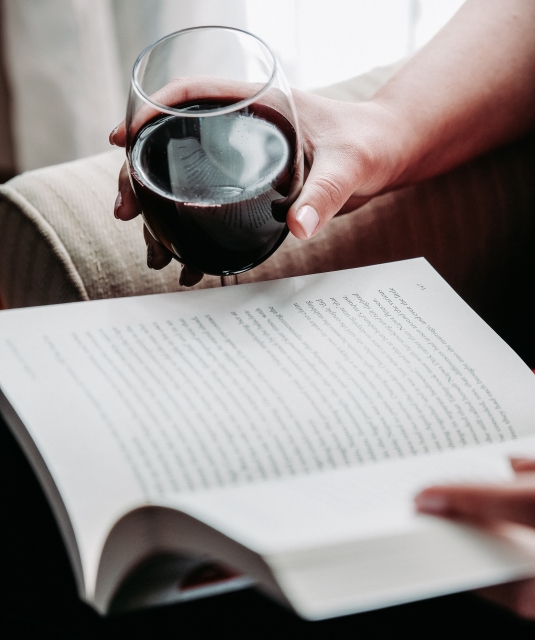
Do yourself a favor tonight. Turn off the TV. Put on some relaxing tunes. Pour yourself a glass of wine and lose yourself in a book. The adventure awaits.

Photo by Jeff Siepman on Unsplash

Solace in Wine

When I started my journey, I had no idea that I would find solace in wine. This magical elixir had me under its spell. After all, I didn’t need a reason to drink it. I just fell in love.

Now, I won’t ramble on with the new phrases in our everyday lexicon or speak of the challenges we’re all facing. Instead, let’s talk about the pleasure that wine brings to our lives and how it can be the proverbial light leading us from dark times.

I’m reminded about a wonderful quote from the movie, “Sideways.” No, not that one. It’s this one instead.

I like to think about what was going on the year the grapes were growing; how the sun was shining; if it rained. I like to think about all the people who tended and picked the grapes. And if it’s an old wine, how many of them must be dead by now. I like how wine continues to evolve, like if I opened a bottle of wine today it would taste different than if I’d opened it on any other day, because a bottle of wine is actually alive. And it’s constantly evolving and gaining complexity. That is, until it peaks, like your ’61. And then it begins its steady, inevitable decline.”

I enjoy Merlot, BTW.

Living in the Moment

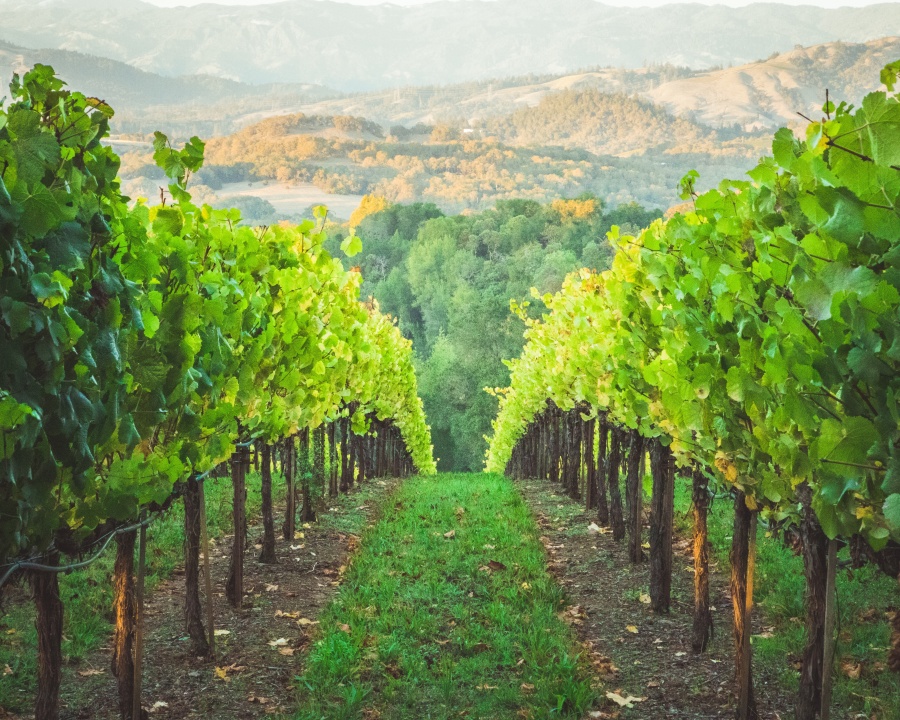
If you think about it, wine is the ultimate way to live in the moment and let yourself ride a wave of unbridled thoughts along a path from the glass to the vineyard.

It’s my happy place.

When you contemplate a wine, research its origins, and read the tech sheet, you gain a deeper understanding. Taking it to the next level with a geography lesson is even better.

You’re transported and can find solace in wine.

How to Live What’s In the Glass

Our journey begins with a place, the AOC, WO, or AVA where the wine was born. The “World Atlas to Wine” is our guidebook.

I can also recommend Oz Clarke’s “World of Wine.” You’ll feel like you’re in the car driving alongside him.

You’ll learn about the land and its people. Terroir becomes evident. Explore the grapes or at least the ones in your glass.

Are they thin-skin picky or thick-skin easy-going?

Do they like it warm or cold?

What makes them shine? Acidity? Unique aromas? Complexity?

These aren’t questions to answer in a moment or even five. Each wine has the potential to be cerebral if given the attention.

Finding Solace in Wine

I’ve poured my glass of Beaujolais Cru, Molin-A-Vent, to be precise. I look at its beautiful color and take it all in to enjoy.

The first aroma I get is cherries, and immediately, I’m transported to summer. I let her rest and get to know life out of the bottle.

Ah, then strawberries come to the surface. I’m reminded of my grandma. She was an immigrant from Hungary, or the Austria-Hungarian Empire at the time. She fled the old country at the start of World War I.

After her third husband passed, she lived with our family. I remember this dish she would make for an occasional dinner. She made what she called were Hungarian pancakes, aka crepes.

She’d make a stack of them. We’d take them and slather a heaping spoonful of Kool Whip on them. Yes, Kool Whip. Then, we’d add fresh strawberries that had macerated in a bit of sugar.

The wine takes me back to my childhood dinner table and Hungarian pancakes with strawberries. And I feel fine.

Associating Memories to Find Solace in Wine

Memories are so powerful, especially if you can associate them with particular scents or sights. My Beaujolais did just that.

For a moment, I was wandering the landscape and feeling the granite soils of Moulin-A-Vent. I was feeling the breeze lift my hair and caress my face. I smiled thinking of my grandma.

It made me love wine even more. I’ll find my solace in wine and let it be my succor. I’ll let it refresh me and revive me. It will be my light.

Photo by Markus Spiske on Unsplash

How I Write a Wine Tasting Note

If you like wine but don’t record your experiences, you’re missing out on an opportunity. I get it. Writing a wine tasting note might seem like overkill if you’re just getting started. You may not know what to say. It might feel awkward.

Fear not. I’m going to share my take on what I want to remember about each glass of wine. I’ll say up front that what I record might not agree with what you think is important.

That’s okay.

Variety, after all, is the spice of life.

Getting Your Focus

Probably the best advice I can give you is not to overthink it. Instead, focus on your first impressions. Without even thinking about it, what is the first thing that comes to mind when you take a sniff from the glass?

A good wine will evolve into different tastes as it rolls around in your mouth and goes down your gullet. The warmth will jump start those esters and bring new flavors and aromas to the forefront.

One way to cement the wine into your memory is to associate what you smell and taste with an experience. Smell is the oldest of our senses and the one most closely linked with memories.

If I say “new car smell,” you know exactly what I’m referencing. It can run the gamut from good to bad, too.

There used to be a variety store, dime store, shall we say, in our town. It sold everything from school supplies to notions (!) to goldfish. It had the most unusual and kind-of unpleasant smell. It never varied. I can still smell it to this day.

I can’t say what I’d do if I encountered a wine with an a la’ John’s Variety Store scent.

A Professional Take

Kevin Zraly’s, “Windows on the World,” describes this concept so eloquently. There are two passages in particular that struck home with me.

It’s essential to understand that the restaurant in which he was the sommelier was at the top of the World Trade Center in New York City. Everything changed on September 11, 2001.

The smell of the debris, dust, and a myriad of other odors is one that he will never forget.

I’ll never forget the images.

The second passage was written by contributor, Wendy Dubit, founder of the Senses Bureau and Vergant Media. She writes of describing a Ouligny-Montrachet to her dying father.

It is nothing short of moving.

BTW, every wine lover must get this book. You will refer to it again and again.

What to Include With Your Wine Tasting Note

I’ll start with the basics. At the very least, your wine tasting note has the info you need to find the bottle again if it turns out to be a love match.

Begin with where you bought the wine, along with the price. To make sure you get the right one, also include the vintage.

Tip: When you see those shelf-talkers, make sure what is on the shelf is the same as the advertisement. Wine Spectator Magazine appreciates it if you alert them if they are misused in this way.

Of course, you should also include the varietal and the grape varieties if they’re listed. That’s the best way to learn about different wines, especially if you’re after the coveted Wine Century Club honor.

The next set of point include:

  • Color
  • Aromas
  • Flavors
  • Other Production Notes

Let’s consider each one’s place in your wine tasting note.

Color

Color can give you a ballpark estimation of what is in the glass. For example, a deep yellow color in a white indicates that it is either from a warm climate or that it has some age on it.

It’s worth mentioning the clarity too. Some winemakers are producing wines that are unfiltered. That means you may see that result in your glass.

Aromas

This part of a wine tasting note often confuses people and probably adds to the perception that wine drinking is elitist.

It’s not.

The best advice I can give you is not to rush into it. Take your time with the wine. The volatile compounds often need time to develop. They need to capture the oxygen to float up the glass.

Temperature is also a factor. Warmer temps speed up chemical reactions. You may find that the wine smells different after it’s had some time out of the bottle.

Flavors

The same advice applies to flavors. And again, try to find associations. Concentrate on what comes to mind first without thinking about it. By all means, don’t let anyone intimidate you or make fun of you. It is a thing.

Other Production Notes

Other things you may find helpful are noting the producer, shipper, and importer. Some wines are exclusive to certain ones. If you like the wines from a particular importer, you may find some gems with others in their portfolio.

If there is some production info, write it down too if you really like a bottle. It’s an excellent way to learn your palate.

Final Thoughts About Wine Tasting Notes

I like to think of wine as an adventure. Learning about it has taught me a lot about geography, for one. Learning to pay attention to aromas and tastes has opened up a whole new world for me. It all began with that first wine tasting note.

Photo by Laura Peruchi on Unsplash