
Natural Wines?

This entry is part 1 of 3 in the series Alternative Wine

The word, natural, is a loaded one. The Dictionary.com definition of “existing in or formed by nature” may seem cut and dried.

So, where does that leave us?

Defining Natural Wines

While there isn’t an official designation or legal status, there are some common denominators like no chemicals, irrigation, mechanical harvesting, and, perhaps most importantly, no manipulation after-the-fact.

Again, I’m speaking as a consumer and wine enthusiast. I am not a vintner. As I see it, there are two ways to view that last point. First, you look at it from the old world perspective.

There’s a saying by Martin Luther that sums it up well.

“Beer is made by men, wine by God.”

Tradition has dictated that Nature rules the vineyard and the harvest. That’s why irrigation and other artificial practices are forbidden in some regions and for some classifications. Some in the industry won’t even call themselves winemakers for just that reason.

Then, there is the new world, specifically, American take on it.

Wine is a commodity like any other good sold on the market. That means making a consistent product that someone will buy consistently and appeal to a large segment of the targeted audience.

It also involves creating a brand. Pick up the average bottle of domestic wine, and you’ll see an eye-catching label with a fun name. It’s all about getting that impulse buy which brings this discussion to the next point.

The Bane of Marketing

Unfortunately, all of these practices equate to another case of a huge lobby misguiding and misinforming their followers. That’s right. It’s organic farming and the natural following.

Pick up any magazine or search for a recipe on the internet. The chances are the ingredients will mention at least one organic product not because it’s better or more nutritious but to sell the message and the gospel.

BTW, under its current wording, hybrids and grafted vines which are the vast majority would qualify as GMOs.

It’s easy to see how it can become a slippery slope quickly. After all, natural doesn’t equal safe. GMOs are not harmful to people or the environment. (I’m putting my money on WHO, AMA, and AAAS instead of the likes of misinformed bloggers who say otherwise.)

Organic farming uses pesticides too, and their products contain residue no matter what you’ve heard to the contrary. That’s marketing in action too. And while it bears the brunt, they are not alone.

The FDA Fail

The problems with the term, natural, regardless of its association with wine are many. The FDA has dragged its collective heels on defining it. Instead, they have vague explanations as they have with the terms, organic and GMOs.

What the FDA hasn’t done are the following:

  • Implied a health benefit
  • Considered the processing method(s)
  • Addresssed the question of pesticides

Natural wines are less insidious but guilty nevertheless. Minimizing any negative environmental effects is worthwhile and should be the aim of anyone in agriculture.

What is wrong is when the industry blurs the lines between cherry-picking and misinformation with a good message. Producers overstep the boundaries where there is no legal definition in place. They’re making it up as they go along. That’s also what makes it filthy.

My take: Buyer, beware! There’s a lot of greenwashing that muddies the waters.
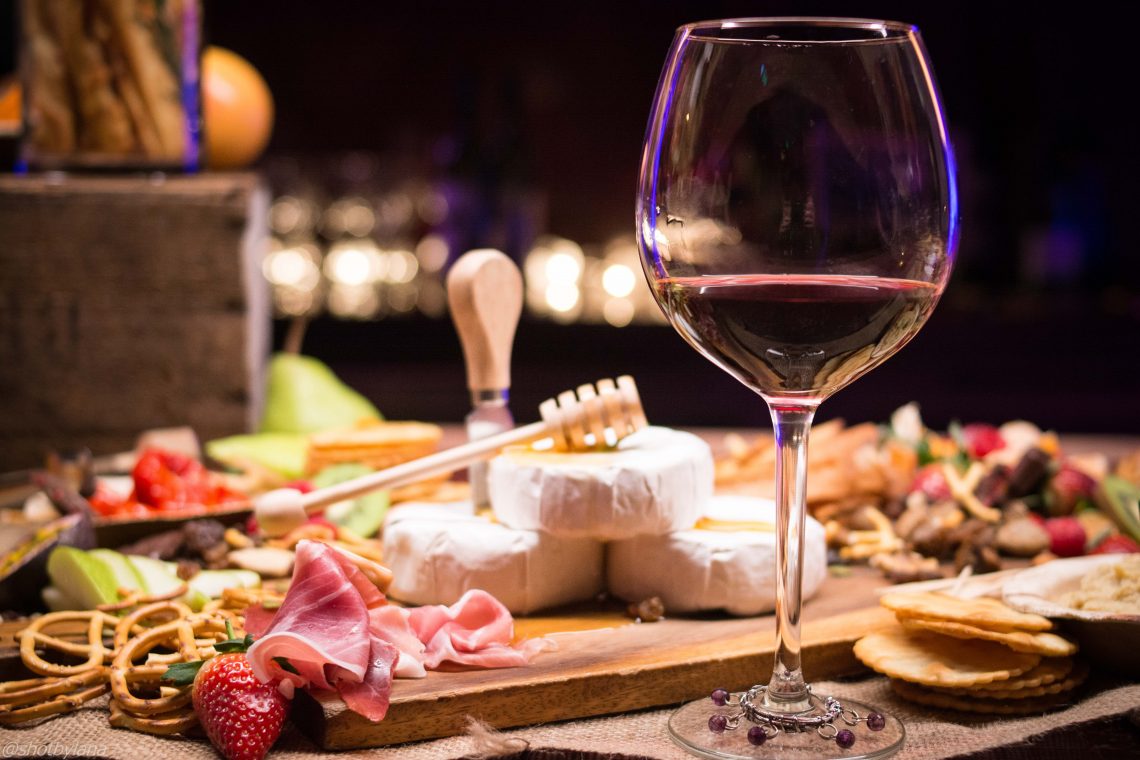
Photo by Jax on Unsplash

The Challenge of Wine-Food Pairing

Pairing the right food and wine is a daunting task.

It’s not hard if you’re dealing with basic dishes. It’s pretty straightforward in part, because the tastes are familiar. We all know what a grilled steak or hunk of cheddar tastes like. Those things give us an edge when selecting a wine even if we’re not conscious of it at the time.

The challenge comes from that wild card. It can be a sauce, spice, or herb that throws us for a loop. It may rest with the way you prepared a meal. A braised hunk of meat tastes a world apart from one that you’ve cooked over the coals.

Then, there are those so-called established rules.

The First Rule Is That There Are No Rules

One of the most cerebral books about pairing that I’ve ever read is David Rosengarten and Joshua Wesson treatise, “Red Wine With Fish: The New Art of Matching Wine With Food.”

The authors’ logic is surprisingly simple. It makes sense! The principles mirror that of cooking. In fact, it helps if you like to do it to make the transition into pairing.

After all, there’s a reason that sweet and sour pork is a thing. Take notes! The culinary world has it down.

The book is an unabashed attack on what many consider sacred. The authors shoot down the dos and don’ts of pairing with tasty examples to prove their points.

They also propose a new approach that begins at a base level of what’s going on on your tongue to what you smell to what you feel. I’ll forgive them for perpetuating the myth that there are regions on your tongue for sweet, sour, salty, and bitter. Science, after all, is provisional and therein lies its strength.

Learning What Works

Experimentation is the thing when it comes to tackling this subject. My husband and I tried a simple approach when we went out to eat last weekend.

We shared a pizza with all the fixings like pepperoni, green peppers, onions, and of course, mushrooms. He ordered a Chianti and me, a Barbera. What we found was that by manipulating the dish we could alter the pairing.

We tried it as-is and with a little salt sprinkled on it. That brought out the sweetness in the wines and tamed them done considerably.

We did the same thing with crushed red pepper. That addition brought out some bitterness and increased the burn noticeably.

The fun thing about this experiment was how aware it made both of us about how we could fix an average pairing and make it better. I’ll be keeping it in mind when we go out to dinner tonight.

I’ll explore this fascinating area of wine knowledge further with my takes on the matter. Of course, it’s subjective. I’m counting on the fact that there are a few out there who have the same genetic mix to taste the same things, the same ways.

Photo by Lana Abie on Unsplash

Tips for Expanding Your Wine Experience

Wine is a social experience. We get it. You break open that special bottle to celebrate a special occasion or just enjoy the moment. Wine covers it all.

Where Do We Go from Here?

The question becomes how do you expand your horizons? Sometimes, we need a little nudge. No one likes to admit that they’re a newbie. We like to go confidently forward in all of our endeavors. But, baby steps are a good thing.

One of the things that my husband and I figured out quickly was how overwhelming it is. It’s not hard to get caught up in topics that pull you in multiple directions. That’s the subject for another post.

One of the first books I read was Madeline Puckette’s work, “Wine Folly: The Essential Guide to Wine.” One of the best things about it was its wine challenge. Simply put, expand your horizons and explore different countries and wines to get out of your comfort zone.

We took up the task.

To date, we have sampled 57 libations of from 15 countries. There have been high moments. Can anyone say Duoro? And ones we’d prefer to forget. Pinotage was only one we’ve tasted to date that disappointed us. That’s a rare thing to say with the state of the art but each to their own.

Making It Happen

Our approach to expanding our boundaries was accidental. Our favorite watering hole happens to be next to a liquor store. It was a natural segue to go from buying a bottle next door and sampling it with our friends.

At first, I did the newbie thing and just wrote down the types of wine. Then, I bought my first wine journal.

If you’re serious about wine, you’ll relate to this experience. I’m trying to expand my palette and identify new aromas. A friend still teases me to this day the first time I remarked about smelling chalk when I tasted a Chablis.

Dude, it’s a thing.

My advice to you is to find a decent wine shop, the bigger the better. They’re more likely to have wines from a wide range of countries. Their prices are also easier on your pocketbook. Then, take advantage of their reward program.

Give Yourself a Treat

Other things we’ve done is to reward our efforts with one or two special bottles a month. I’m talking about a bottle in the $50 to $100 range.

It’s well and good to become experts in everyday wines. But, if you want to learn more, find out what it means from a wine perspective. Price isn’t a guarantee of quality, especially in certain areas. It’s more of a marketing thing.

Making the Most of Your Purchases

But wine has limited quantities so that those supply-and-demand rules can work their magic. We’re not rich. That’s why I created this blog to reach out to everyday folks who love wine within a budget.

Take the road less traveled, as per Robert Frost‘s sound advice.

You’ll find excellent values and wines at affordable prices that your snobbish friends may scorn. Their loss. That’s what makes enjoying wine at this level so exciting. You can find treasures, literally.

Wine is a journey. Enjoy every glass along the way.

Photo by Terry Vlisidis on Unsplash

Welcome to Wining with Chris

The purpose of this blog is twofold. First, I wanted to keep a virtual diary of my experiences vying for the coveted, Certified Specialist of Wine title from the Society of Wine Educators.

Second, I wanted to share our wine experiences. Now, I’m not talking globe-trotting and visiting wineries in France and Italy. I’m focusing on everyday things like trying new wines and finding food pairings. I’ll discuss bottles you can buy at your local wine shop that are affordable and perhaps, a stretch from the usual glass of chardonnay or cab.

Most of all, it’s about having fun and enjoying the journey. That’s where the real enjoyment lies. I’ll also add some local twists with news about the scene on Lake Minnetonka in the land of 10,000 lakes.

So, grab a glass and your favorite bottle, and let’s talk wine and food and everything that makes life great.

In the words of the inestimable Ernest Hemingway,

Wine is the most civilized thing in the world.”

Photo by Remo Vilkko on Unsplash