Why Wine Is Worth the Effort

Many of us join the wine world because of an ah-ha moment of extreme pleasure tempered with a feeling of having found something extraordinary. It’s as if a switch has flipped, illuminating a new world of taste and smell. But you may wonder, is wine worth the effort?

The answer is an emphatic YES! Consider what wine brings to the glass.

History Swirling in the Glass

People have been enjoying wine in some form for roughly 8,000 years. It didn’t go away. It flourished through the centuries of war, disasters, and economic upheaval. It’s a survivor. A glass of wine has a story to tell of the land that nurtured the vine, the people tending the vineyard, and the winemaker crafting the elixir.

A Universal Beverage

The diversity of people imbibing makes wine a global drink. It’s part of many cultures, religions, and even cuisines. Some foods, like French and Italian, evolved with wine. Thus, it is part of the community of sharing a meal or lingering afterward. It brings us together all year long and not just in October. What other beverage has this gravitas?

An Inspirational Drink

Wine has inspired poets, musicians, and artists. They have been drawn to its magic through the ages, praising it for all it is—a part of the life experience. Thomas Jefferson said, “Wine brightens the life and thinking of anyone.” Louis Pasteur reminded us that “A bottle of wine contains more philosophy than all the books in the world.”

How can such praise not sway you to at least check out what it may offer?

Welcoming to Everyone

You needn’t spend a fortune on a bottle to experience wine. That isn’t what wine is about. It celebrates with us, comforts us, and makes us happy. It doesn’t judge. Eleanor Roosevelt is often credited with saying, “No one can make you feel inferior without your consent.” That includes the appreciation of wine being a special club, complete with a secret handshake and sayings.

It’s not.

Wine is a labor of love, from the grower pruning his vines to the harvesters toting bins of grapes to the winery to the winemaker deciding this wine is ready. It’s about sharing stories and laughter over a bottle. It’s about making a meal taste better, even if it’s just buttery popcorn with a glass of Chardonnay.

Wine brings new experiences to the table in a way no other beverage can. The so-called rules come from people but not the drink. A new world awaits anyone willing to uncork the magic.

Photo by Art Institute of Chicago on Unsplash

Wine and Its Curse of Knowledge

The best and worst thing you can say about wine is that it’s complicated. Some relish its intricacies and mysteries. Others see it as a barrier. Usher in its curse of knowledge. The term describes the kerfuffle people often fall into when they throw themselves into a topic. They can’t get enough of it, learning everything they can about it.

Some call them experts. Others call them bores.

Wine writer Jamie Goode, in his book “The Science of Wine,” put it best when he wrote of the miracle of the vine, seemingly developing out of nothing. We can say the same of every living thing. It’s when we try to learn and, more importantly, try to explain it that we get into trouble.

Yes, wine can be complicated if you delve into the viticulture, to say nothing of wine law, geography, geology, climate, and winemaking. As writer Terry Theise puts it, “Wine doesn’t care how much you know about it.” It’s people who lead the way down a myriad of rabbit holes.

The Curse of Knowledge and Wine

When someone becomes passionate about a subject, the natural response is to learn more. It’s easy to do with wine, especially as you hone your tastes and discover the stories. Then something curious happens on the way to Rome. We lose our perspective as a newcomer. We become another victim of the curse of knowledge.

A wine enthusiast may seek out others of the same ilk to talk about the deeper matters. They don’t share these thoughts with casual wine drinkers because it may take too much explaining. Instead, they ruminate about terroir and tradition with fellow enthusiasts. Then, one day, they can no longer speak casually about wine.

Wine’s Need for Ambassadors

It’s not difficult to understand why wine might face headwinds. It’s had to deal with COVID, the rise of seltzers, RTDs, and CBD-THC drinks. That’s saying nothing about the war on anything traditional. Wine laws suddenly morphed into stereotypes. Let’s not even mention the confounding factors, such as climate change and the economy.

The fact remains that wine needs ambassadors. After all, it’s been a part of the human experience for thousands of years. It has been there during Mass, celebrations, and solace. It’s always been there to provide whatever comfort or support we’ve needed. It’s ingrained in our culture.

Breaking the Curse of Knowledge

Our growing knowledge of wine has been its saviour and curse. Learning more has helped people produce better and tastier products. Yet, it has also created barriers. Breaking down these walls is paramount to ensuring its continued existence.

Communication is the solution. We mustn’t assume when speaking to someone new to wine. Recently, I struck up a conversation with someone dipping their toes into the wine vat. When I mentioned the blueberry aromas I was detecting in a shared glass, he asked me why they added the berries to the wine.

I was reminded of Richard Feynman’s Technique. True understanding of a subject means being able to explain it in its simplest terms as if to a child. If you can’t, you may not understand it fully yourself. The ability to explain the presence of different aromas in a glass of wine qualifies as a topic to grasp fully before telling someone else about it.

Start with the basics. Don’t dive into secondary and tertiary aromas. Save the jargon and terminology for later, if at all. Remember that knowledge isn’t going to make the wine taste better, although it will help one appreciate it—when they’re ready.

A newcomer’s perspectives are often enlightening. I appreciate the acidity in wine, but it may taste of vinegar to someone not used to drinking it. Likewise, they may pick up on different aromas that I may have missed, like the faint smokiness of a toasted barrel.

Perhaps the greatest challenge to overcoming the curse of knowledge is letting go of having to share too much. Small bits work just as well. You don’t have to expound like the wine snob expert. Let the wine do the talking. It probably can say it better if given the chance.

Photo by Jaredd Craig on Unsplash

Sleepy Thing

Original watercolor on offer on eBay

The Palette and Circumstances of Wine

Admittedly, wine can tread into esoteric waters, intimidating those not bitten by the bug. A conversation with a non-wine-drinking friend reminded me of the palette and circumstances of wine. He asked if expensive wines are always good. Of course, that’s a loaded question, but worth considering.

One can speak of terroir, the reputation of the winery/vigneron, and winemaking. There are uncontrollable variables of climate and precipitation. Trends, fashion, and other social factors influence what’s in the glass. However, it all comes down to the experience, along with the taster’s palette and circumstances of the wine.

Judging Wines

Tasting notes offer an excellent way to hone one’s skills. Experience is a wonderful teacher. As a watercolor artist, I see a myriad of greens once spring arrives. The sky changes from cool cerulean to warmer shades of ultramarine blue. Notes help you connect the intricacies of your palette and the circumstances of the wine to understand it more fully.

It gives you the vocabulary to voice your impressions.

The Palette and Circumstances of Wine

The discussion reminded me of another time talking about domestic Pinot Noir. Two family members adamantly cling to their passion for California wines, dismissing Oregon. Dismissing an industry with over 1,100 wineries seems a bit rash. However, it rests with the varying palettes.

I have a distinct Old World palette. I rarely order a domestic glass or buy a bottle. A gifted bottle of Caymus tasted too heavy and sweet for me. It wasn’t that the wine was bad. On the contrary, it was simply my preference for a different style. That’s also a two-way street. Oregon wines embracing a French expression may similarly seem different to someone used to bolder styles.

Circumstance Matters

Time, place, and companions influence one’s perception of a wine or other beverage. One warm summer evening, I remember sharing a bottle of warm Pimms with a few family members. We were on vacation, sitting together on a porch. We had nothing to drink; the Pimms was all we had. So, we passed the bottle among us.

Many would cringe, but, at that time, in those circumstances, the Pimms was wonderful. It became part of the family lore and a cherished memory. The drink is an integral part of the story.

Making the Most of Wine

The palette and circumstances of wine have a certain magic. You can’t always snap your fingers to conjure these moments. They happen when you least expect it. I think A.A. Milne said it best about enjoying the moment, the company, and the wine in the timeless classic “Winnie the Pooh.”

“We didn’t know we were making memories, we were just having fun.”

Photo by Theme Photos on Unsplash

Why You Shouldn’t Fear Wine

It’s complicated, but it’s simple. The former is a product of the modern era. The latter is the true story and explains why you shouldn’t fear wine. It’s been a part of our culture and evolution for over 7,000 years. We’ve been companions since that time. Wine consoled us, brought us together, and kept us safe when water wasn’t potable. As Napoleon Bonaparte famously said,

In victory, you deserve Champagne. In defeat you need it.

That begs the question: what happened?

The World at Train Speed

It’s hard for us to grasp that there was once a time when your world was only a 10 or 20-mile sphere. It’s a time before cars. Your mode of transportation was a horse. Fast forward to the 1830s and beyond, when the steam locomotive came on the scene. A whole new world opened up to those able to afford it.

Consider the cultural impact. We can equate it to the Internet and the smartphone. Think of how different everything is because of that device. Maybe you remember when the Internet didn’t exist, and landlines were a must-have. Perhaps you can’t even imagine what it would be like without these innovations.

People’s lives were profoundly impacted by the train. They grasped for stability when everything changed in a relatively short time. That’s the time when many French châteaus were constructed. They became a link to the past in a rapidly changing world. It wasn’t a time to fear wine but embrace it as part of history.

Remember that many cultures have made wine for centuries. It was a part of their identity. Immigrants to America brought these traditions with them, with their links to their heritage. Contrast that with our modern-day perception of wine. It’s another drink to enjoy and one with lots of competition.

When Did People Begin to Fear Wine

Perhaps one can make a case for ratings being the traitor to wine. Before, we followed our tastes. If we liked it, it was good. Then, this notion of quantifying that quality became a thing. Instead, we were left questioning our judgment. Is this wine really okay? Am I missing something? Somehow, I don’t think Napolean was doubting his enjoyment of Champagne.

Wines with faults are another matter. It’s pretty obvious when it has a musky, dank odor that something isn’t right. It’s a fair assumption that we can all agree on that score.

An interesting study grouped wine buyers into six categories. The overwhelmed made up the largest percentage. They are the people who might not buy wine often. They have the deer-in-the-headlights look when they walk into a shop. These individuals are open to advice but are easily frustrated by the magnitude of choices. They may, indeed, fear wine.

The next highest percentage included image seekers. They want to impress with their choices. That includes the guy who buys the most expensive bottle and doesn’t hesitate to share that fact. Then, there are the traditionalists who know what they like. They enjoy wine for what it is.

The savvy shoppers are more adventurous with their sipping, particularly if it includes a deal. The satisfied sippers are, well, satisfied. They don’t deviate much from what feels comfortable. Finally, there are the wine enthusiasts. Interestingly, people in this group often have a story to tell about falling in love. The veil on its history has fallen. They see something different in wine. They also buy the most.

Why You Should Embrace Wine

Wine has been a steadfast companion for humans throughout history. It’s not like it hasn’t been a commodity. However, wine has also been something more that transcends the marketing, hype, and snobbery. We speak of sharing a bottle more so than we do with any other beverage. That says a lot.

Wine brings us together, whether in victory or defeat, in stability or change. It’s about relaxing and savoring the elixir. You don’t have to identify the aromas. There are no rules. It’s worth noting that sommeliers have different brain structures because they train their sense of smell. Your brain is different, too, if you work in a certain job or have a particular hobby.

The point is you decide your level of involvement. If you don’t want to delve into writing tasting notes or reading tech sheets, it’s okay. Wine is ready to meet you at any level. You needn’t fear wine. It’ll be there on your terms whenever you want to drink it. If you want, learn more about it. You’ll find some fascinating stories that will make you enjoy what’s in your glass even more.

Discover Your Favorite Wine

Photo by Klaus Kreuer on Unsplash

How Not to Pick a Wine Shop

When you get into wine, one of the most important decisions you must make is choosing a wine shop. It’s as tough as choosing the bottle since many stores like to consider themselves experts but fall woefully short. They give the beverage a bad name and probably turn off more than a few would-be wine enthusiasts.

The fact is that stocking shelves with the stuff doesn’t make you an expert or even a decent wine shop. It takes learning and understanding wine, the philosophies of different countries, and, yes, terroir. It’s not merely pushing the deal you got from your distributor, nor is it necessarily slapping your business’s name on a bottle of plonk. Here are a few red flags of a wine shop you should avoid.

Lack of Expertise

Look elsewhere if the store manager congratulates you on your choice of Italian wine when you’ve bought a Spanish bottle. Yes, the languages are similar. But, seriously, at least learn the countries of what you sell to sound like you know something about wine.

Mistreatment of Bottles

We get it. Space is limited in a lot of storefronts. You want to offer a broad selection. However, if you’re going to bring in high-end bottles like a first-growth Bordeaux, at least have respect for the wine to not put it in direct sunlight or upright.

Oxidation and Light Stike

The main role of a manager of a wine shop is to know your clientele. Don’t waste everyone’s time and money with bottles your customers are unlikely to buy. That makes it hard when a wine enthusiast stumbles into your store and buys a Primitivo or Montepulciano only to find that it’s brown and tastes horrible because it’s been on the shelf under fluorescent lights for 10 months.

And for goodness sake, don’t put your best bottles on the top shelf just inches from the lights. Those wines deserve better.

Lack of Regional Knowledge

There’s more than one region in California, France, or New Zealand. You’ll find great bottles in the Central Coast, Loire Valley, and Hawke’s Bay. A manager of a wine shop should also know where the best bottle come from in a country or region. Hint: It’s not southern Chile or California’s Central Valley. Just saying.

Lack of Varietal Knowledge

We understand that a manager wants to stock the bottles that sell. It’s no accident that Cabernet Sauvignon is the most widely planted grape variety in the world. However, there’s more than Chardonnay, Sauvignon Blanc, and Pinot Noir. Try about 1,368, according to wine guru Jancis Robinson. If you’re going to call yourself a wine shop, at least have the knowledge to back up the claim.

Widely Over-Priced Wines and Gouging

Of course, times are hard, and everyone is trying to get by as best they can. That’s no reason to gouge your customers with widely over-priced wines. Just because a bottle is prestigious with an impeccable pedigree doesn’t mean you should double the price. It doesn’t matter if you have the occasional nouveau riche spender looking for the highest priced wine to burn some cash and impress their friends.

Can you say wine-searcher.com? We can.

Wine has a mystic that draws us closer to its magic. Unfortunately, that sometimes gets in the way of our good judgment. But those who are really wine people get it, too. It isn’t about cheating your customers or mistreating the bottles. Real wine people respect the tradition, their buyers, and the contents in the bottle. Finding a good wine shop is as important as choosing what to drink next.

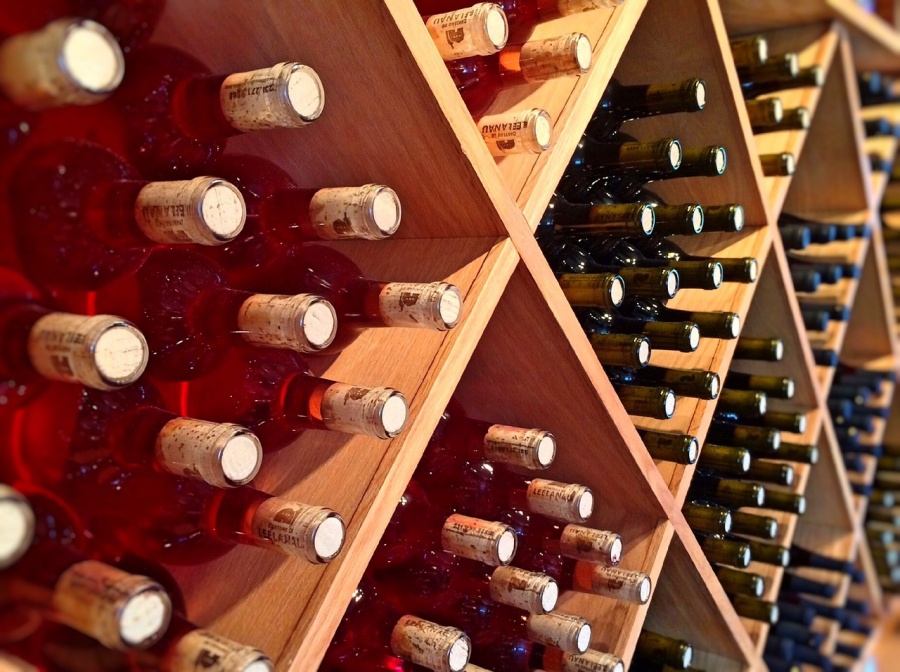
Photo: https://pixabay.com/images/id-853109/