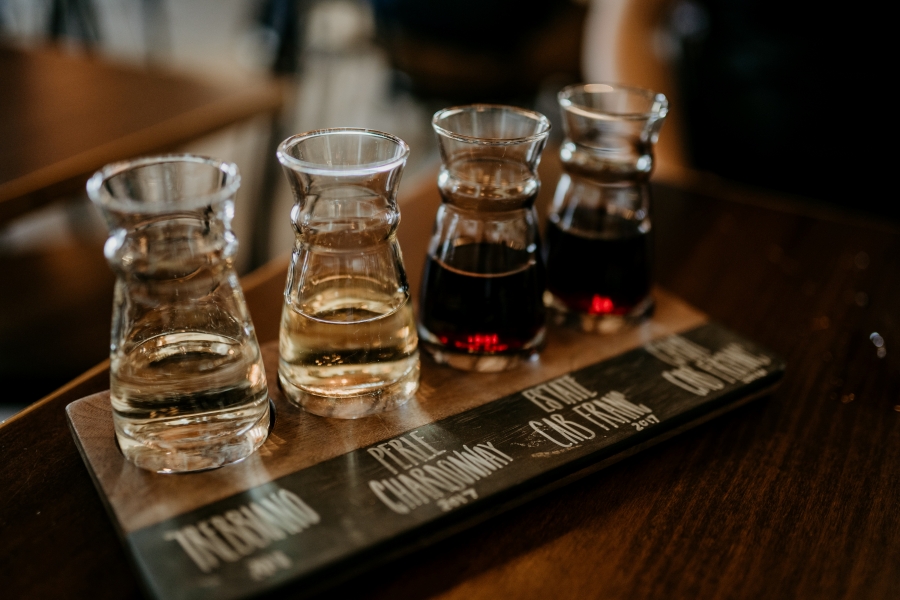
If you like wine but don’t record your experiences, you’re missing out on an opportunity. I get it. Writing a wine tasting note might seem like overkill if you’re just getting started. You may not know what to say. It might feel awkward.
Fear not. I’m going to share my take on what I want to remember about each glass of wine. I’ll say up front that what I record might not agree with what you think is important.
That’s okay.
Variety, after all, is the spice of life.
Getting Your Focus
Probably the best advice I can give you is not to overthink it. Instead, focus on your first impressions. Without even thinking about it, what is the first thing that comes to mind when you take a sniff from the glass?
A good wine will evolve into different tastes as it rolls around in your mouth and goes down your gullet. The warmth will jump start those esters and bring new flavors and aromas to the forefront.
One way to cement the wine into your memory is to associate what you smell and taste with an experience. Smell is the oldest of our senses and the one most closely linked with memories.
If I say “new car smell,” you know exactly what I’m referencing. It can run the gamut from good to bad, too.
There used to be a variety store, dime store, shall we say, in our town. It sold everything from school supplies to notions (!) to goldfish. It had the most unusual and kind-of unpleasant smell. It never varied. I can still smell it to this day.
I can’t say what I’d do if I encountered a wine with an a la’ John’s Variety Store scent.
A Professional Take
Kevin Zraly’s, “Windows on the World,” describes this concept so eloquently. There are two passages in particular that struck home with me.
It’s essential to understand that the restaurant in which he was the sommelier was at the top of the World Trade Center in New York City. Everything changed on September 11, 2001.
The smell of the debris, dust, and a myriad of other odors is one that he will never forget.
I’ll never forget the images.
The second passage was written by contributor, Wendy Dubit, founder of the Senses Bureau and Vergant Media. She writes of describing a Ouligny-Montrachet to her dying father.
It is nothing short of moving.
BTW, every wine lover must get this book. You will refer to it again and again.
What to Include With Your Wine Tasting Note
I’ll start with the basics. At the very least, your wine tasting note has the info you need to find the bottle again if it turns out to be a love match.
Begin with where you bought the wine, along with the price. To make sure you get the right one, also include the vintage.
Tip: When you see those shelf-talkers, make sure what is on the shelf is the same as the advertisement. Wine Spectator Magazine appreciates it if you alert them if they are misused in this way.
Of course, you should also include the varietal and the grape varieties if they’re listed. That’s the best way to learn about different wines, especially if you’re after the coveted Wine Century Club honor.
The next set of point include:
- Color
- Aromas
- Flavors
- Other Production Notes
Let’s consider each one’s place in your wine tasting note.
Color
Color can give you a ballpark estimation of what is in the glass. For example, a deep yellow color in a white indicates that it is either from a warm climate or that it has some age on it.
It’s worth mentioning the clarity too. Some winemakers are producing wines that are unfiltered. That means you may see that result in your glass.
Aromas
This part of a wine tasting note often confuses people and probably adds to the perception that wine drinking is elitist.
It’s not.
The best advice I can give you is not to rush into it. Take your time with the wine. The volatile compounds often need time to develop. They need to capture the oxygen to float up the glass.
Temperature is also a factor. Warmer temps speed up chemical reactions. You may find that the wine smells different after it’s had some time out of the bottle.
Flavors
The same advice applies to flavors. And again, try to find associations. Concentrate on what comes to mind first without thinking about it. By all means, don’t let anyone intimidate you or make fun of you. It is a thing.
Other Production Notes
Other things you may find helpful are noting the producer, shipper, and importer. Some wines are exclusive to certain ones. If you like the wines from a particular importer, you may find some gems with others in their portfolio.
If there is some production info, write it down too if you really like a bottle. It’s an excellent way to learn your palate.
Final Thoughts About Wine Tasting Notes
I like to think of wine as an adventure. Learning about it has taught me a lot about geography, for one. Learning to pay attention to aromas and tastes has opened up a whole new world for me. It all began with that first wine tasting note.
Photo by Laura Peruchi on Unsplash