Are You a Wine Snob?

Today, I started my CSW wine prep class. We began the discussion at its logical starting point with wine chemistry and the constituents of wine. It’s amazing to think of all those reactions going on in the glass. It made me wonder if that makes me a wine snob.

Food for Thought

Part of the reason it came to mind was a section in Michael Steinberger’s pithy book, The Wine Savant: A Guide to the New Wine Culture. He begins with a discussion of how non-oenophiles might view us, wine enthusiasts.

Yes, there is a mystic, if you will, about wine. You have only to look at how some people have left other careers to follow the Muse, such as Master of Wine, Jennifer Simonetti-Bryan.

It’s an easy path to follow.

Wine isn’t just a beverage you toss back after a tough day at work, although, you certainly could. But, it’s so much more than that.

What Is the Magic Behind Wine?

It begs the question, what is it about wine that makes us swoon?

It could be the history. Wine does go back over 6,000 years. There aren’t a lot of other beverages that have that kind of resume. But, there are other things too.

It has a certain romance about it.

It’s esoteric, if you take the wine snob route.

Wine has all those grapes to choose from and all those countries providing them.

I came back to an excellent point made in Steinberger’s book…

Wine Appreciation

Wine is unique in this whole association with snobbery. We don’t call out enthusiasts or experts in other cultural arts for their knowledge. We don’t call art lovers, snobs, nor musicians.

I think there are two factors at work in this arena. Both feed each other to create this monster as “one who has an offensive air of superiority in matters of knowledge or taste.”

First, there is this behavior that creates an unpleasant atmosphere. No one likes to be put down for what they don’t know or perhaps don’t care about.

Their loss.

There is also another force at work, I suspect. That is the dreaded curse of knowledge. That is the fallacy whereby a person may forget what it was like not to know something. When they discuss it, they use jargon and language they assume that others grasp too.

You’ve probably had at least one college professor guilty of that one.

Then, you throw in a bit of the Dunning-Kruger Effect where someone knows enough to be dangerous and far too simplistic in the greater context.

How Not to Be a Wine Snob

If you study wine, something happens that puts you in your place…

You soon realize that the more you know, the more you need to know.

Wine is a complex topic that crosses into many fields, such as viticulture, politics, ideology, history, and a whole lot more. Generalizations are not recommended. I’m reminded of a lovely quote by journalist, H.L. Mencken who said,

Explanations exist; they have existed for all time; there is always a well-known solution to every human problem—neat, plausible, and wrong.”

Final Thoughts About Being a Wine Snob

Therefore, my solution for casting snobbery to the curb is to remember that wine is just as complicated in its reality as it is in the glass. There’s no need for haughtiness or proving yourself. Chill out and enjoy it.

However, if truth be told, I relish being called a wine snob just as much as I love being branded a science nerd. Always remember that friends don’t let friends derive drunk.

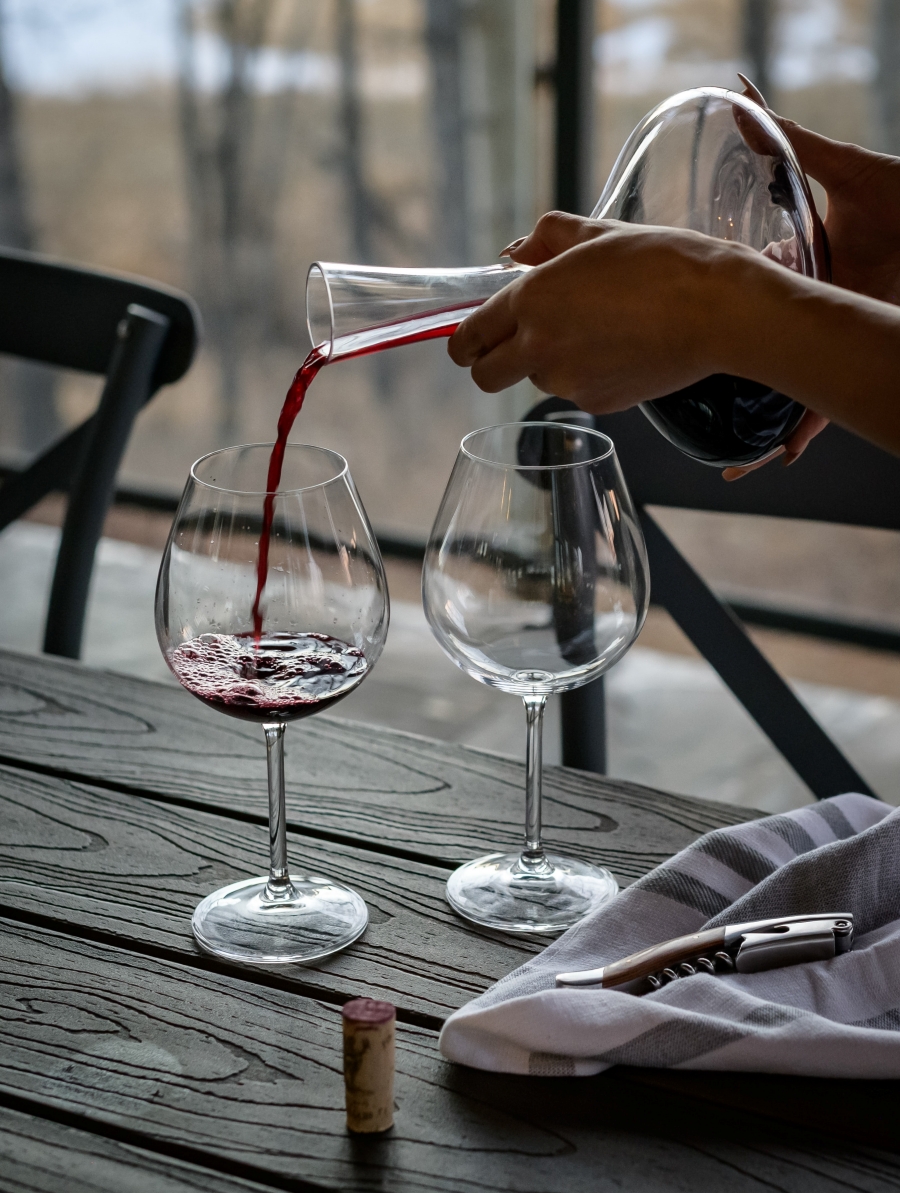
Photo by Theme Photos on Unsplash

Wine Pairing Tips: Food or the Wine?

You’ve just been seated at a new restaurant that you’ve never been to before. The hostess hands you both the menu and the wine list. Which do you pick up first? I’ll explore some wine pairing tips to make your meal more enjoyable, no matter which one you decide on first.

Those Wine Rules

When push comes to shove, it depends on what you like. That makes sense from a wine pairing perspective. You gravitate toward the foods you prefer. Naturally, you’ll do the same with your wine. That’s an excellent starting point.

I hesitate to use the word, rules, because it implies that there’s no wiggle room. If we all experienced food and wine the same way, it would make sense.

But we don’t.

The first of my wine pairing tips is to view them as suggestions, albeit, good ones. It boils down to what kind of experience you want. If the wine is just wetting your whistle, it probably doesn’t make much of a difference.

On the other hand, if you want to complement each one or even make one or both better, then you need to give it a bit more thought.

What Does a Good or Bad Match Taste Like?

It would probably help if we define the goal. Let’s start with a bad match that doesn’t involve wine but makes the point loud and clear…

Have you ever taken a sip of orange juice after brushing your teeth? Yuck! Now that is a bad match. The flavors clash, making both things taste awful. That can happen with wine too.

What about a good match?

You’ve probably had had many stellar ones. Chocolate chip cookies and milk, anyone? An ice-cold beer and a brat? You can have the same experience with wine and your meal.

Some Basic Wine Pairing Tips to Start

One of the classic wine pairing tips is to match the weight of the wine with the food. Think poached salmon versus scallops in a cream sauce.

Another analogy is to compare the mouthfeel of the wine with either skim, 2 percent, or whole milk. It’s an expression of the sugar and the alcohol.

Many wine lists will give you some clues about this factor based on how the restaurant groups their selections. They may divide wines into Crisp, Light Wines, Medium-Bodied Wines, and Full-Bodied Wines.

Now you’re in the right ballpark.

The Dish on Acidity

Acidity in wine ranges from 2.9 to 3.9 on the pH scale. For comparison, vinegar is 3 whereas water is neutral at 7. It’s a good trait when it comes to what’s in your glass.

A wine that is more acidic can cut through fats in what you’re eating and create a refreshing experience. Think of champagne and lobster. Yummy!

Acidic wines can work with other dishes that also fall into this realm. A crisp rosé can make a divine pairing with Margherita pizza. The acidity of the wine cuts through the fat of the cheese and complements the tomato sauce.

More Dos and Don’ts for Wine Pairing Tips

A few more tips can help you pick a wine that you will enjoy with your meal…

Let’s say you’re drinking a lovely California Cabernet Sauvignon. The chances are that you’re noticing a drying sensation in your mouth, especially if it’s a young wine. Those are the tannins at work. A delicious way to manage them is a steak. The fat in the meat will tame them down and make for an enjoyable pairing.

One things you should always remember is how tastes interact. Salt, for example, will bring out the sweetness in wines. The interactions work both ways. Alcohol will make bitter foods more so. Likewise, it is a disaster in a glass with spicy foods.

If there is a golden rule with wine pairing tips, it is that the food should not be sweeter than the wine. Let’s just say it’s like that toothpaste-orange juice scenario.

Not good.

Wine pairing isn’t an art or science as much as it is an experience. Like flavors in food and what’s in your glass can elevate a meal. It’s a worthwhile goal.

By the way, I reach for the wine list first.

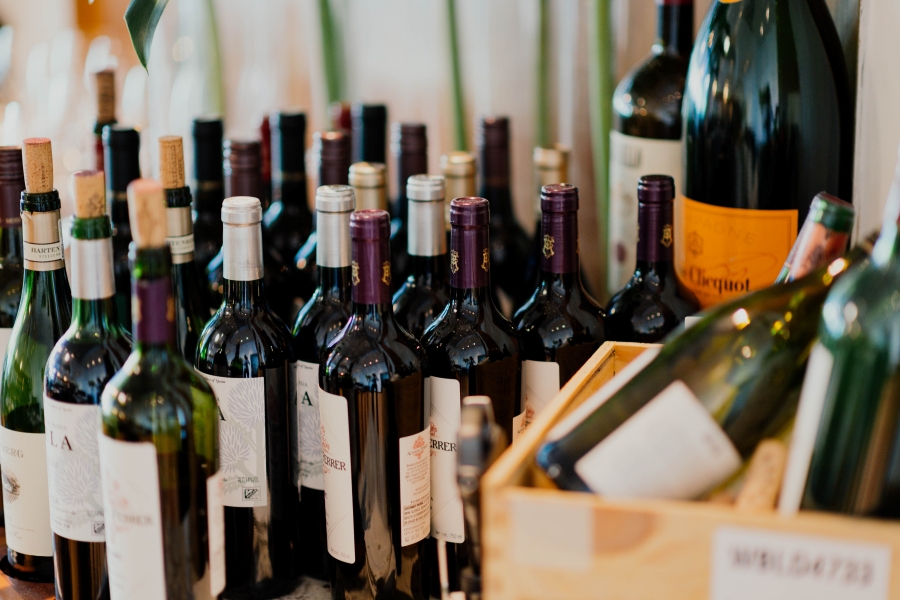
Photo by Pinar Kucuk on Unsplash

100 Grape Varieties: The Pleasures and Challenges

This past weekend marked a special occasion for my husband and me. By opening a 2012 Cantina dell’Alunno Montefalco Sagrantino DOCG, Umbria, Italy, we have tasted 100 grape varieties.

That achievement qualifies us for membership in the Wine Century Club.

Becoming a Member

The club operates on the honor system. Would you want it any other way if you are true wine lover? Simply download the application and start tasting! You do get credit for varieties in the blends you drink, too.

I was faithful during our journey to keep detailed notes in my wine journal. Even if you don’t have aspirations of trying 100 or even 200 or 300 varieties, it’s an excellent way to develop your palette and learn what you like.

It’ll also tell you something about the wine store from which you purchase it.

100 Grape Varieties

I first took up the challenge of trying different wines when I read the book, Wine Folly: The Essential Guide to Wine, by Madeline Puckette. The test was to try 50 different kinds of wine.

We said, bring it on!

Trying 100 grape varieties starts off easy, thanks to the likes of the grape variety, Gouais Blanc. Let’s just say it is the reason for many others to try. The first 50 were a piece of cake. However, you have to cross the pond if you’re serious about reaching 100.

Italy is a treasure trove for finding indigenous varieties and some value-priced offerings. Southern Italy was an especially excellent area to explore. We’ve adored our experiences with Negroamaro and Montepulciano, to name just two.

The Not-So-Fun Wines

Okay. Everyone is different. Thank goodness! The same applies to your wine tastes. Other than that awful lingonberry wine we choked down, we’ve only had two that stand out as less than favorites among the lot.

Pinotage, as I later learned, is one of those grapes that you either love or hate. The middle ground is sparse. It is a cross between Pinot Noir and Cinsaut. It is a decidedly South African variety, with a smattering of plantings elsewhere.

When we were nearing 100 grape varieties, I asked the owner at our local wine shop about her thoughts about Pinotage. Her hesitation said a thousand words.

The other wine we struggled with was Blaufränkisch. Being Hungarian, I wanted to like this bottle we bought.

I didn’t.

But, lesson learned. Sweet red wines aren’t my thing. The bottle we tried lacked structure and characters. I suspect is was just not the best example of this varietal.

On to the Next 100 Grape Varieties!

As I looked at our completed application, I took notice of the varieties we have let to try. Let’s just say that challenge only scratches the surface of what we have in store for us.

However, we’re seeing it as an opportunity. We’ve never sampled any wine from the Finger Lakes area. And, we’ve only tried some local hybrid grapes. Of course, we can’t forget Italy with its 2,000 varieties.

We also took our first step toward that next milestone this past weekend, too. We just tried our 101st wine. I love a challenge. The journey awaits for the next 100 grape varieties.

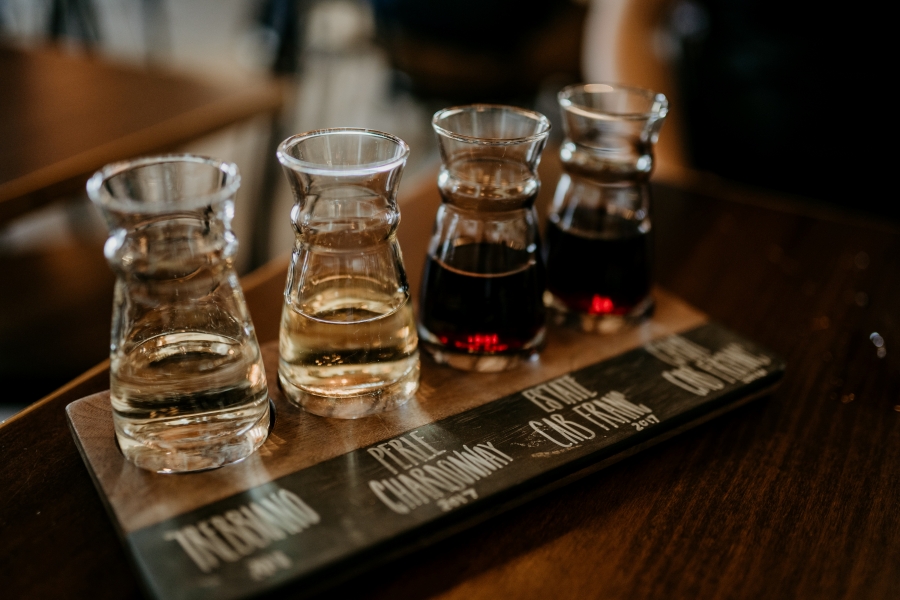
Photo by chuttersnap on Unsplash

Glyphosate and the Vineyard

You only have to say the word to get a reaction. As with any other type of agriculture, it has stirred the pot of controversy in the world of wine. So, what is the deal with glyphosate and the vineyard?

Glyphosate or Roundup was the subject of a widely publicized lawsuit in 2018 which considered its role in the development of non-Hodgkins lymphoma. Of course, anyone can sympathize with the plaintiff. I would wish cancer on no one.

However, that case and proposals by the French President Emmanuel Macron to ban the use of the herbicide raise some disturbing questions about glyphosate and the vineyard.

The Elephant in the Room

I won’t speak to the viticulture part of the argument. Instead, I want to focus on a more fundamental question. Is there a valid concern over the use of glyphosate at all?

The crux of the matter rests squarely with the 2015 decision by the World Health Organization (WHO) to classify glyphosate as a “probable carcinogen.” Just that phrase raises eyebrows.

To the layperson who is unfamiliar with the language of science, it is a condemnation. The mere suggestion is enough to damn glyphosate. The word, probable, has little meaning. While it is valid from a scientific perspective, it only serves to confuse others.

But was WHO’s conclusion correct?

WHO’s Evidence Was Flawed

There are two ways to look at the correctness issue. First, let’s consider its place in the scientific community.

Numerous studies and reviews have not found any link between glyphosate or any type of cancer, including this one, and this one. The EU didn’t agree with WHO’s conclusion, either

The basis for WHO’s reports comes from the International Agency for Research on Cancer (IARC). It’s worth noting that part of the basis for their conclusions were trials done on laboratory animals. Mice are not little humans. Causation isn’t valid when comparing the two.

It’s also essential to consider that the physiological mechanism by which glyphosate works does not exist in humans.

Since its publication, the IARC findings have come under fire from a number of sources. The US Environmental Protection Agency (EPA) also concluded that there is no cause for concern with using glyphosate.

We must also consider the lawsuit itself. The plantiff’s lawyers didn’t even argue the case against glyphosate itself on the man. Instead, they claimed it was the ingredient’s interactions with other chemicals in the environment that caused the condition to develop.

What chemicals and how? From a science perspective, that is a huge leap to make without the evidence to back it up.

WHO and the Suppressed Data

If all of this still has you thinking about glyphosate and the vineyard, consider this finding about the data on which WHO based is probable warning.

It turns out that Dr. Aaron Blair, the Chairman of the IARC’s monograph suppressed data from the Agricultural Health Study (AHS) that would have nullified WHO’s 2015 decision. Evidence suggests that he was aware of its existence since 2013.

Glyphosate and the Vineyard

These details insinuate that the WHO’s findings were based on incomplete evidence that was cherry-picked to support a flawed conclusion. The consensus in the scientific community is that glyphosate doesn’t present a concern for human health.

If the question of whether to use this herbicide rests with those impacts, the data don’t support a decision not to use it.

It’s also imperative to look at this controversy from a scientific point of view. Science cannot prove anything. It merely observes and draws conclusions from what it sees. Les we forget,

No amount of experimentation can ever prove me right; a single experiment can prove me wrong.”

~Albert Einstein

We can only hope that the judge that hears the appeal will be more grounded in a scientific understanding to correct this incredulous claim.

As for glyphosate and the vineyard, there are two takeaway messages. First, pesticides are a necessary evil for agriculture. The alternative is low yields and the risk of a loss of production or even worse. The vines have a lot to contend with in the vineyard. Pesticides give them a fighting chance against the likes of parasites and disease.

Second, no pesticide is without its risks, even organic ones. Yes, they use chemicals too. They also use synthetic ingredients like copper sulfate where a so-called natural substitute doesn’t exist. Paracelsus, the Father of Toxicology has some sage advice on this score.

All things are poisons, for there is nothing without poisonous qualities. It is only the dose which makes a thing poison.”

Even water is harmful with you drink enough of it.

The answer for glyphosate and the vineyard is simple. Apply it in accordance with the instructions on the label. If you do that and wear proper protection, you’re well ahead of the game.

Photo by Ales Me on Unsplash

Types of Wine to Develop Your Palette

Recently, I was browsing our local breast cancer consignment shop. As my husband said, leave it to me to find the wine-related items. Of course, anything that helps me explore different types of wine is tops on my list. The book, The Food Lover’s Guide to Wine, caught my eye.

While the book is a bit dated, the info is meaty. It is so jam-packed that it’s a book that you have to savor instead of devour in a few sittings. I always like to review the resource and recommended list for anything I read. This one did not disappoint.

That’s how I found out about the Wine Century Club.

Going Outside of the Box

The best thing about this site is that it encourages you to think outside of the box and explore different types of wine. Varieties like Pinot Noir, Chardonnay, and Cabernet Sauvignon are comfortable. They are likely a part of everyone’s wheelhouse.

That’s great!

We all have to start somewhere on our wine journey. However, it’s essential to view it from a marketing perspective.

Popular types of wine have a lot of competition. That means the best ones will come with a like price. That’s part of the reason why going down the beaten path can help your wine journey

Finding the Values

When you have a familiar variety, you have an easy sell. The chances are that potential buyers know it and have a preconceived notion about what they’re getting. That’s a good thing when it comes to wine.

Wine snobbery is a real thing. That’s one reason why some people gravitate toward expensive wines with the idea that it’s better.

It’s not.

But, finding a real gem that you and others will try with a clean slate is a cool experience. Think of it as a blind tasting without having to cover up the label.

As we’ve embarked on our Wine Century Club experience, we realized that we had tried all the international varieties and have gone well beyond those bounds.

Lessons Learned With the Different Types of Wine

The new experiences are priceless. We’ve had the chance to detect graphite, petrol, chalk, chassis, violets, cinnamon, mint, and many other delectable scents.

Also, we’ve traveled figuratively through five continents and 20 countries. We’ve tasted the wine. We’ve made wine. And we’ve picked grapes. We’ve tasted grapes right off the wine.

All I can say now is that I want more!

Final Thoughts About the Types of Wine

The more I learn about wine, the more I realize how much I don’t know—and how much more I want to explore. I’m not content to stick with one variety. I want to discover the bounds of the types of wine and what surprises are still in store. A hundred varieties are just the start.

Photo by Zachariah Hagy on Unsplash