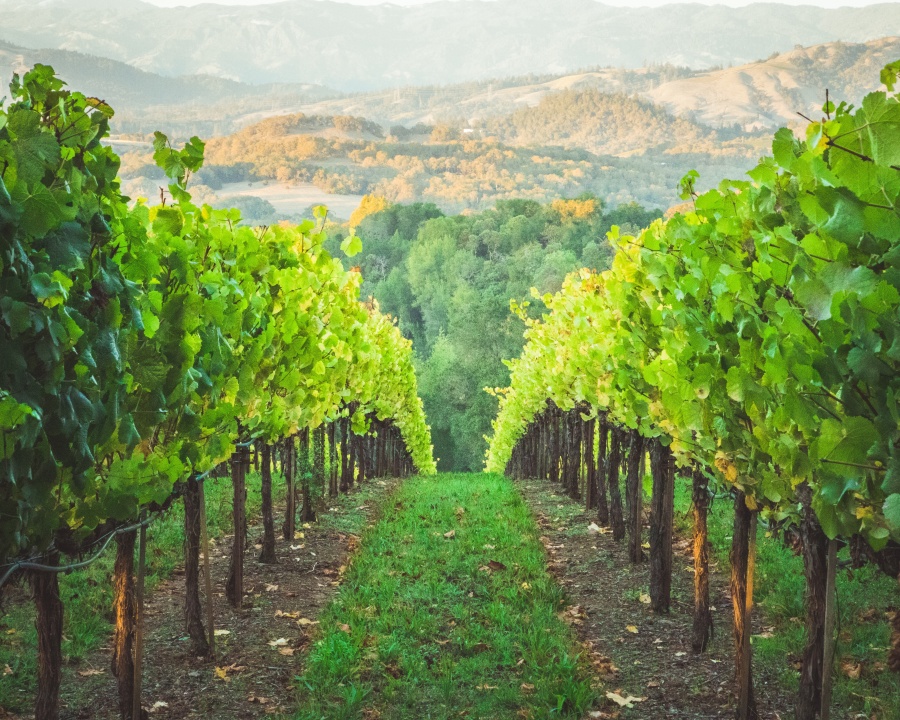
A New Grape Variety-Crimson Pearl

I talked about our experience picking grapes. We stayed at the vineyard for a while to savor lunch and the beautiful day. It also brought a new grape variety to our tally with Crimson Pearl. This one is unique for Schram Vineyards since it was not developed by the University of Minnesota. They have been actively developing winter-hardy grapes.

The Problem With Finding the Ideal Grape Variety

The species of grapes you may typically drink is a variety of Vitis vinifera. It is a Eurasian species brought to the United States in various ways and forms. The vine is native to the Mediterranean area. Perhaps you already see the difficulty. Generally, wine is produced in a belt between 30 and 50 degrees latitude in the northern and southern hemispheres.

The latitude of Minneapolis is 44.9 degrees N. That would seem to be well within its range. After all, Champagne sits between 48 and 49.5 degrees N. The answer rests with climate. Both areas have continental climates. However, the latter has maritime influences that remove some of the bitter edges. Minnesota doesn’t have this benefit. The lowest temp recorded here was -60 degrees F.

It’s not uncommon for temperatures to go well below 0 degrees F any given winter. Just ask the British Columbia wine industry what the cold did to their 2024 grape harvest. They expected a 99 percent loss. That’s what makes the work of the University of Minnesota so valuable in finding a grape variety that can handle these extremes.

The Story of Crimson Pearl

Crimson Pearl is a Plocher-Vines named grape variety. This vine has the goods. It has endured temperatures as low as what took out the British Columbia harvest without injury. That’s the key. Losing grapes is one thing. Damaged vines are another matter.

After picking Marquette grapes, we enjoyed a glass after the harvest, knowing we contributed because we also picked a couple of years ago. Then, we had a glass of Crimson Pearl.

The color was a beautiful ruby, showing its youthfulness. It was fruit-forward, with dark berries dominating the nose. The minty aroma was there after a bit of swirling. It wasn’t a serious wine, but it fit the moment so well. We sat in Adirondack chairs overlooking the vineyards. It was the perfect wine made from the right grape variety for the moment.

Photo by Edoardo Bortoli on Unsplash

Savoring History One Grape at a Time

“I bet you haven’t tried this grape,” Troy said when we entered the tasting room. Finding someone who shares—and understands— your passion is like stumbling upon a person who can speak your language in a foreign country. Someone else knows why tasting our 200th grape variety meant so much to us.


Our journey began with varieties everyone has heard of, no matter what their experience level. It soon turned us to the hinterlands of Italy, searching for unpronounceable grapes of Abruzzo and Trentino-Alto Adige. We traveled, metaphorically speaking, to the Dão Region and Douro River valley of Portugal, drawn by the country’s love of its indigenous grapes. Greece was a treasure trove.

We had challenged Greg, the shop owner, to find us new ones. He certainly added to the bunch. He brought us our first taste of Saperavi and guided us on our maiden voyage into orange wines made from Ribolla Gialla from Friuli-Venezia Giulia, Italy.

When we visited wine stores, I wasn’t looking for certain bottles. I was shopping for grapes.
A bottle of Cantina Dell’Alunno Sagrantino Di Montefalco screamed at me as we approached 100 varieties. I remember one writer suggesting that it be decanted for 24 hours. They were right. Eight years in the bottle wasn’t enough to tame this tannic beast. My notes were kinder, and I volunteered to try it again with proper decanting.

Our wine journey included many highlights, including tasting a 2010 Château Lascombes, Margaux. The question that always puzzles wine neophytes is knowing when you’re tasting a good bottle. We didn’t need a tap on the shoulder to clue us in when we sipped this velvety, red elixir. Yes, I could live on a desert island with just this one wine.

The most sensual moment came when the first sip of the 2014 Château d’Yquem Sauternes touched my lips. Nothing prepared me for the flood of candied lemons, succulent white peach, juicy apricot, and honey. I experienced the evolution of a poured wine, with each sniff and sip bringing a new adventure. I felt I finally understood wine on a different plain. It was a glimpse of the spark that captured so many.
The final leg of our journey began with a seated tasting of Armenian wines. This tiny, landlocked country of the Eurasian Caucasus’ southern portion held the key to our last grape varieties and the road to the 200th one. I had never tasted any, so it was a chance to score a few more grapes. I didn’t realize it included tasting some of the oldest grapes known based on archaeological evidence.

We were going to be savoring history.

We shared our table with another enthusiastic couple of wine lovers, John and Kara. The presenter teased that we would have something to one-up our wine-snob friends with these bottles from the Keush and Voskevaz Wineries. John quipped, “But they’re all here.”

We added three new grapes to our list: Voskehat, Khatouni, and Areni. The wines were captivating, with aromas that teased but didn’t reveal themselves at first. Perhaps it was learning the grapes were part of the roughly 6,000-year wine story. Maybe it was the closest thing to seeing it being born with a link to the grapes’ probable birthplace with each wine.

The presenter told us the epic story of winemaker Vahe Keushguerian and his daughter Aimee. Keushguerian and his team did what many would consider impossible: he brought history to life with the wine made of smuggled grapes out of Iran. It was a dream made into wine.

Troy showed me the bottle, a 2021 Molana Rasheh, Iran. He asked if I had seen “Somm 4—The Cup of Salvation.” I hadn’t been aware of the fantastic story of Keushguerian and his pursuit until the Armenian tasting.

“This is the wine Vahe made.”

The wine brought me full circle. My wine journey had taken me across the globe, from my Hungarian heritage to the beauty of Provence to Minnesota’s weather-resistant grapes. But it all came down to this sip, this opportunity to taste the past and pull back the curtain on wine’s magic.
It was the wine moment I’ll never forget. A quest to tell their story met another grateful listener and recipient. The wine was exquisite, but how else can one describe something imbued with passion, risk, and timelessness?

When I think of all the obstacles and challenges along my own wine journey, I feel humbled. We’ve savored many bottles with family and friends. Some were stunning, while others taught us the meanings of corked, lightstrike, and bottle shock. However, if this was the only path to get to the 200th grape, so be it. It was worth it. Now, onto the 300th grape.

Photo by Apolo Photographer on Unsplash

Wine Sustainability and the Future

The wine world is buzzing with talk about agriculture. Which is best? Is it traditional, terroir-based? Organic? Biodynamic? Regenerative? Where does wine sustainability fit into the picture?

The terminology is confusing as is, let alone with the variables within each one. For example, there are “Organic” and “Made With Organic Grapes” wines. They are not the same thing.

Some people follow biodynamic principles yet are not certified. There is sustainable farming and regenerative agriculture. Where do we go from here for wine sustainability?

Marketing Vineyards and Wineries

Interestingly, some winemakers forgo becoming certified because it limits them. If a stubborn case of powdery mildew occurs, they want to be able to do what’s necessary to save the harvest. Wineries undoubtedly don’t have a lot of overhead to risk losing a vintage.

Besides, certification costs money, something that is difficult to spare these days. It may not be enough to sway customers since many already consider wine confusing without throwing wine sustainability into the mix. The industry has many headwinds as it is.

What I find bewildering is the concept of wine sustainability. Merriam-Webster defines the term as “of, relating to, or being a method of harvesting or using a resource so that the resource is not depleted or permanently damaged.” I look at it as being able to stay in business.

That means smart practices in the vineyard to minimize losses and optimize the harvest. That extends to marketing to drive sales and grow your business. You can talk about cover crops and their benefits, but it’s also common sense if you want to cut costs on treating your vineyards. That’s the beauty of integrated pest management. It encourages wise planning.

The Slippery Slope to Greenwashing

Making environmentally friendly choices is a good thing. It exists on a moral level. After all, we eukaryotes share a common heritage. We can also trace all life back to the last universal common ancestor (LUCA), making us all related if you want to get technical. We should respect all life. If being sustainable accomplishes this goal, it’s worthwhile.

The wine industry may be ultrasensitive on this score. Numerous examples exist where wine sustainability is at the forefront of many business decisions. However, many go the extra, extra mile. I applaud them. It seems a sad state of affairs when some use it as making good choices for marketing. It should be the right thing we do without thinking about it and making it a selling point.

Sustainability should be common sense from a business perspective and for the environment.

Final Thoughts

Wine sustainability sounds like best business practices in action. Avoiding waste puts more money in their pocket. It has extended from common-sense winemaking into a marketing practice. I appreciate any business wanting to limit their environmental impact. What strikes me as sad is that we have to call it out, perhaps because it’s not as commonplace as it should be.

Photo by Andrea Cairone on Unsplash

Things You Must Know About Wine Ratings

Wine ratings are a strange animal. We give them unquestioning power over our wallet. We let them guide our imbibing experience. They embolden our wine knowledge.

But do they really matter?

Wineries, winemakers, and retailers think so. That’s why you see all those shelf talkers. They boast of high scores and awards that a wine has received. They lavish praise on the skill of the vintner to tease out the beverage’s captivating aromas and delicious tastes.

Let’s put these things in perspective.

What Wine Ratings Tell You About a Place

You may see a wine described by its typicity, i.e., how accurately a wine reflects its origins and grape variety. You can easily test the concept for yourself by doing a tasting of a varietal wine.

For example, if you drink a New Zealand Sauvignon Blanc alongside one from France’s Loire Valley, you’ll note striking differences. You won’t need a lengthy wine description to help you identify the grassy, heady aromas of the former compared to the citrus aromas of lime and grapefruit for the latter.

The two different styles give you a clear idea of the effects of climate at the base level.

You can notice these differences with many of the so-called international varietals. Wines from cold climates have other aromas and tastes than ones from warmer areas.

That’s why wine ratings specify where the bottle is from to give you a heads-up about what’s in your glass.

Marketing to Different Wine Buyers

Let’s look at wine ratings from the marketing perspective for more insights. A 2008 study by the wine retailer Constellation analyzed sales data to determine six different types of wine buyers.

The Overwhelmed Buyer has hard time getting past the number of choices. They feel intimidated just at the thought of buying a bottle. They like wine and often find themselves choosing a wine based on its label. That’s one reason why brands such as Barefoot and Yellow Tail have done so well.

The Savvy Shopper is always on the lookout for a deal. They will bargain shop to get the best prices. The Satisfied Sipper knows what they like and doesn’t deviate far from the course. Big producers like Constellation and E&J Gallo bottle several brands with mass-market offerings.

The big producers also find consumers who represent the Traditionalists. These individuals respect the well-known bottles and define brand loyalty. The Image Seeker has enough knowledge to be dangerous, which they supplement with research on wine ratings.

Finally, Wine Enthusiasts know their stuff. These individuals take extra steps to build on their knowledge with courses, books, and webinars. Wine ratings make a difference to them, but they also know how to read between the lines.

As you can see, there are many facets to wine marketing that target varying comfort and knowledge levels.

What It Means to Taste Wine

It may come but wine critics can’t tell you what you’ll like. Only you can decide it for yourself.

The fact remains that a lot more goes on in the enjoyment of wine than what’s in your glass. It boils down to genetics. Let’s consider what physiology has to tell us about taste.

People have only three genes that determine how they perceive sweet and unami flavors. There are 25 for bitter.

About 20 percent of people are what science calls super-tasters with a lower threshold for detecting bitterness.

Several genes code for different aromas. That means you may taste something that another cannot.

A wine critic can speak to the technical aspects of the wine and winemaking. They can also talk about a wine’s complexity. That’s because they experience it differently than the average Joe.

A 2016 study looked at the physical variations in Master Sommeliers’ brains versus non-experts using fMRI. It turns out that challenging their sense of smell resulted in structural differences between the two groups.

Because professionals use smell so often, their brains have responded by creating more neural pathways. If you find wine intimidating because you can’t experience what they can, there’s a good reason for it.

Therefore, those wine ratings are reflecting their understanding of it and not necessarily what anyone else might notice.

Final Thoughts About Wine Ratings

We all experience wine differently because our hardwiring varies. Wine ratings capture what someone else detects in their glass. They have honed their sense of smell and trained their brains.

Perhaps, American wine dealer and writer Alexis Lichine summed it up best when he said, “The best way to learn about wine is in the drinking.”

Photo by Laura Peruchi on Unsplash

The Need for Pesticides in the Vineyard

I am going to start with a radical statement that applies to the vineyard and agriculture in general. the need for pesticides is real. It applies to the home garden and commercial operation. The reason is…

We want our plants to grow and thrive.

You don’t want to spend all that time planting vegetables, anxiously waiting to start canning and freezing only to have your tomatoes succumb to blight. The same thing applies to a vigneron. Sure, they want to make a profit, but they also want to share their wine.

Let’s start with some facts.

The Need for Pesticides Is Natural

Plants and animals don’t sit by idly waiting for parasites and predators to devour them. Black walnuts produce allelopathic chemicals to reduce competition to survive.

Likewise, termites make the same compound that exists in mothballs for the same reason.

Remember what Darwin said about survival of the fittest?

The thing is that weeds, aka misplaced plants, are opportunistic. They take advantage of any opportunity or a bare patch of ground that they find. They have to do so. The alternative is a failure to survive.

Wine varieties vary in their ability to fight off parasites and disease. Carménère, for example, doesn’t do well against phylloxera. It needs help, which it, fortunately, gets from the sandy soils of Chile.

Alternatives to Pesticides

To underscore the need for pesticides, let’s look at the alternatives. The oldest and perhaps least invasive is to hand pull weeds out of the vineyard. That’s probably an option if you only have an acre or two.

How does a commercial vineyard with dozens of acres manage?

The fact is that it’s not an option in some cases. Sure, you can pull bedstraw, bindweed, or hog peanut vines out of your vines. However, if you’re dealing with something deep-rooted, it’s more work than you’ll want.

Timing is also a factor. It’s essential to manage weeds when you can minimize their spread. That means getting rid of them before they go to seed.

A viable alternative is cover crops. The advantage of this method is that you can reduce weeds in a way that minimizes your work.

Whether it’s grass or something else, they fill in space and act as a living mulch to keep weeds under control. However, it’s still essential to keep them in check so that they don’t overstay their welcome.

Putting the Need for Pesticides in Perspective

I approach this topic from an ecologist point-of-view. Planting anything that isn’t native or non-invasive is unconscionable to me. I spent too many hours getting rid of that crap to condone it, no matter what the reason.

My take is that cover crops are a tool. It may not work in habitat restoration, but it can be a viable way to manage weeds in some scenarios. That’s where the value of thinking out of the box comes into its own.

Photo by Jaime Casap on Unsplash