An Italian Grape With a Story

Every grape has a story. Wine may have started with Vitis vinifera, but it has expanded in countless directions with the 1,368 or so varieties that exist today. It is selective cultivation on a grand scale. That brings us to the story of an Italian grape once threatened with extinction: Minutolo.

The top global varieties haven’t changed much in the last 14 years. Cabernet Sauvignon, Chardonnay, and Merlot all reign supreme. Interestingly, Cabernet Sauvignon is one of the few without a breakup story, such as anything-but-chardonnay (ABC) drama or the “Sideways” saga. Yet, an Italian grape like Minutolo has existed quietly without attracting all the hoopla.

The History of the Italian Grape Minutolo

The story of Minutolo is an ancient one that begins in Puglia, or the heel part of Italy. People knew the grape as Fiano Minutolo because of its resemblance to Fiano. That’s not unusual. Similar situations existed with Carmenère and Merlot in Chile. DNA has helped us establish the correct genetic origins of many grape varieties.

Many cultural stories define Italy since it wasn’t a unified country as we know it today until the early 20th century. Regionalism is very much alive. The Italian grape Minutolo is a part of this journey for this southeastern region. It produces aromatic wines. Hence, its other synonym is Moscatellina.

The wines are also low in alcohol and acidic, making it an excellent pairing with the local seafood cuisine. They would make a delightful match with classic dishes, such as spaghetti with mussels or Orecchiette con Cime di Rapa (easy on the chili). One of the golden rules is pairing wines and foods from the same area. Minutolo is a textbook example.

You may wonder what happened. Each grape variety has its quirks and challenges. Minutolo is no exception. While its vigor is decent, it’s less productive than other varieties. Fiano has greater popularity and may have been one of many factors that brought Minutolo to the brink of extinction, including its superior productivity.

Take the guess work out of buying, learn your Wine style now

Resurrecting Indigenous Italian Grapes

The wine world includes two groups: innovators and traditionalists. The former wants freedom from the regulations of which Italy has a lot. They also want an opportunity to be creative. They’ll accept the lower IGT tier if it holds this promise. Think of the Super Tuscans and where they’ve gone.

The latter involves time-tested methods but often looks toward indigenous grape varieties to solidify its production. Extinction of something is scary. Perhaps human nature also nudges us in this direction. That was part of the motivation behind the I Pástini winery with the Italian grape Minutolo and its “Rampone” offering. This variety offers a means to connect with the past and bring it to modern-day palettes.

It’s the passion of the family winery to bring back their heritage with ancient varieties. They began their mission in 1996, celebrating their first harvest in 2003. The rest, as they say, is history. It’s history in a bottle.

Tasting Minutolo

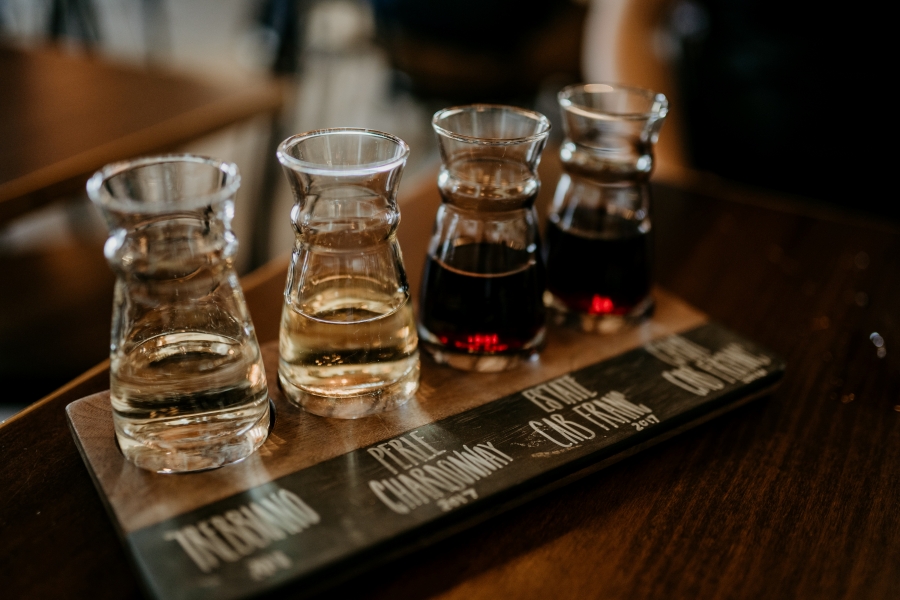
I am a romantic at heart. A well-written tasting note can easily seduce me into trying a wine. Kermit Lynch describes Minutolo as having a “…gorgeous perfume of blossoming flowers, lemon verbena, and wild sage.” Sold!

My first impression was the juicy acidity that tickled my mouth with its freshness. You can easily imagine the Puglian landscape if you close your eyes and let a light breeze caress you. The nose was moderately intense, with grapefruit and lime zest pungency. It screams for anything seafood that itself would benefit from a squeeze of citrus. Absolutely delightful!

Final Thoughts

Exploring new wines opens you to novel experiences, particularly if you enjoy them with local cuisine. After all, the two grew up together. This Italian grape Minutolo was a pleasant surprise. It was refreshing as an aperitif and equally enjoyable with seafood. I also felt satisfied, knowing I was supporting the worthy mission of I Pástini to save the ancient grapes.

Photo by Tamara Malaniy on Unsplash

A New Grape Variety-Crimson Pearl

I talked about our experience picking grapes. We stayed at the vineyard for a while to savor lunch and the beautiful day. It also brought a new grape variety to our tally with Crimson Pearl. This one is unique for Schram Vineyards since it was not developed by the University of Minnesota. They have been actively developing winter-hardy grapes.

The Problem With Finding the Ideal Grape Variety

The species of grapes you may typically drink is a variety of Vitis vinifera. It is a Eurasian species brought to the United States in various ways and forms. The vine is native to the Mediterranean area. Perhaps you already see the difficulty. Generally, wine is produced in a belt between 30 and 50 degrees latitude in the northern and southern hemispheres.

The latitude of Minneapolis is 44.9 degrees N. That would seem to be well within its range. After all, Champagne sits between 48 and 49.5 degrees N. The answer rests with climate. Both areas have continental climates. However, the latter has maritime influences that remove some of the bitter edges. Minnesota doesn’t have this benefit. The lowest temp recorded here was -60 degrees F.

It’s not uncommon for temperatures to go well below 0 degrees F any given winter. Just ask the British Columbia wine industry what the cold did to their 2024 grape harvest. They expected a 99 percent loss. That’s what makes the work of the University of Minnesota so valuable in finding a grape variety that can handle these extremes.

The Story of Crimson Pearl

Crimson Pearl is a Plocher-Vines named grape variety. This vine has the goods. It has endured temperatures as low as what took out the British Columbia harvest without injury. That’s the key. Losing grapes is one thing. Damaged vines are another matter.

After picking Marquette grapes, we enjoyed a glass after the harvest, knowing we contributed because we also picked a couple of years ago. Then, we had a glass of Crimson Pearl.

The color was a beautiful ruby, showing its youthfulness. It was fruit-forward, with dark berries dominating the nose. The minty aroma was there after a bit of swirling. It wasn’t a serious wine, but it fit the moment so well. We sat in Adirondack chairs overlooking the vineyards. It was the perfect wine made from the right grape variety for the moment.

Photo by Edoardo Bortoli on Unsplash

In Defense of Wine Descriptions

There has been a lot of noise lately about the value of wine critics and their sometimes lengthy wine descriptions. The push back has come from both in and outside of the Bacchus sphere. Perhaps, some of it is due to Robert Parker’s retirement.

Maybe that has empowered many to speak up against the value of wine scores.

The Value of Wine Descriptions

Much has been said about the esoteric nature of wine and how it intimidates many people. It’s understandable because of the mystic that exists around it.

How many industries have such a world built around them? We read reviews of gadgets on Amazon and don’t go waxing poetic about them. Wine is different. Reviews articles you see are mainly crap, anyway. It’s just marketing—and affiliate money.

One could argue that wine descriptions are in a league of their own. They don’t necessarily sell a wine in the way that a Consumer’s Report review would.

Instead, they offer vital clues to a person familiar with wine of quality and not always just price as some claim. A non-wine individual’s take would naturally scoff at heady wine descriptions if they don’t get it.

Defining Quality Wines

It’s essential to understand what defines quality in the wine world before one starts casting stones around the room. There are four characteristics that define quality versus plonk. They are:

  • Long finish
  • Balance
  • Intensity of flavor
  • Complexity

It’s a road map from acceptable to good to very good to outstanding, depending on how many boxes you tick off the list.

Even a neophyte has to understand that to describe something that embodies all those things takes some words. And anyone who has tasted even a few wines knows that they vary.

Logic tells us quite clearly then that lengthy wine descriptions are an unspoken measure of quality. A mediocre wine isn’t worth the hot air.

The complexity comes from the 30 or so chemical reactions that occur during fermentation. The chemistry still is at work in the barrel or vat and into the bottle.

The different compounds continue to form volatile chemicals that translate into the detectable aromas. Someone who isn’t accustomed to trying to determine them won’t know that they’re present.

There’s a good reason why the brains of sommeliers differ from those who aren’t experts.

It’s easy to criticize something you don’t understand.

Final Thoughts About Wine Descriptions

Not everyone likes wine. We get that. I don’t like soccer, bourbon, or prime time TV, for that matter. However, it’s easy to sit in the peanut gallery and bally about insults. Wine takes more than its share of hits.

I like reading wine descriptions. It’s fun for me to enjoy someone’s experience with a bottle. I may not have the same take on it, but I can appreciate how wine can transform an experience to the ethereal.

Perhaps, those critics can take a step into the light and learn something from someone who has expertise in something they have yet to understand.

Photo by Reiseuhu on Unsplash

How I Write a Wine Tasting Note

If you like wine but don’t record your experiences, you’re missing out on an opportunity. I get it. Writing a wine tasting note might seem like overkill if you’re just getting started. You may not know what to say. It might feel awkward.

Fear not. I’m going to share my take on what I want to remember about each glass of wine. I’ll say up front that what I record might not agree with what you think is important.

That’s okay.

Variety, after all, is the spice of life.

Getting Your Focus

Probably the best advice I can give you is not to overthink it. Instead, focus on your first impressions. Without even thinking about it, what is the first thing that comes to mind when you take a sniff from the glass?

A good wine will evolve into different tastes as it rolls around in your mouth and goes down your gullet. The warmth will jump start those esters and bring new flavors and aromas to the forefront.

One way to cement the wine into your memory is to associate what you smell and taste with an experience. Smell is the oldest of our senses and the one most closely linked with memories.

If I say “new car smell,” you know exactly what I’m referencing. It can run the gamut from good to bad, too.

There used to be a variety store, dime store, shall we say, in our town. It sold everything from school supplies to notions (!) to goldfish. It had the most unusual and kind-of unpleasant smell. It never varied. I can still smell it to this day.

I can’t say what I’d do if I encountered a wine with an a la’ John’s Variety Store scent.

A Professional Take

Kevin Zraly’s, “Windows on the World,” describes this concept so eloquently. There are two passages in particular that struck home with me.

It’s essential to understand that the restaurant in which he was the sommelier was at the top of the World Trade Center in New York City. Everything changed on September 11, 2001.

The smell of the debris, dust, and a myriad of other odors is one that he will never forget.

I’ll never forget the images.

The second passage was written by contributor, Wendy Dubit, founder of the Senses Bureau and Vergant Media. She writes of describing a Ouligny-Montrachet to her dying father.

It is nothing short of moving.

BTW, every wine lover must get this book. You will refer to it again and again.

What to Include With Your Wine Tasting Note

I’ll start with the basics. At the very least, your wine tasting note has the info you need to find the bottle again if it turns out to be a love match.

Begin with where you bought the wine, along with the price. To make sure you get the right one, also include the vintage.

Tip: When you see those shelf-talkers, make sure what is on the shelf is the same as the advertisement. Wine Spectator Magazine appreciates it if you alert them if they are misused in this way.

Of course, you should also include the varietal and the grape varieties if they’re listed. That’s the best way to learn about different wines, especially if you’re after the coveted Wine Century Club honor.

The next set of point include:

  • Color
  • Aromas
  • Flavors
  • Other Production Notes

Let’s consider each one’s place in your wine tasting note.

Color

Color can give you a ballpark estimation of what is in the glass. For example, a deep yellow color in a white indicates that it is either from a warm climate or that it has some age on it.

It’s worth mentioning the clarity too. Some winemakers are producing wines that are unfiltered. That means you may see that result in your glass.

Aromas

This part of a wine tasting note often confuses people and probably adds to the perception that wine drinking is elitist.

It’s not.

The best advice I can give you is not to rush into it. Take your time with the wine. The volatile compounds often need time to develop. They need to capture the oxygen to float up the glass.

Temperature is also a factor. Warmer temps speed up chemical reactions. You may find that the wine smells different after it’s had some time out of the bottle.

Flavors

The same advice applies to flavors. And again, try to find associations. Concentrate on what comes to mind first without thinking about it. By all means, don’t let anyone intimidate you or make fun of you. It is a thing.

Other Production Notes

Other things you may find helpful are noting the producer, shipper, and importer. Some wines are exclusive to certain ones. If you like the wines from a particular importer, you may find some gems with others in their portfolio.

If there is some production info, write it down too if you really like a bottle. It’s an excellent way to learn your palate.

Final Thoughts About Wine Tasting Notes

I like to think of wine as an adventure. Learning about it has taught me a lot about geography, for one. Learning to pay attention to aromas and tastes has opened up a whole new world for me. It all began with that first wine tasting note.

Photo by Laura Peruchi on Unsplash

100 Grape Varieties: The Pleasures and Challenges

This past weekend marked a special occasion for my husband and me. By opening a 2012 Cantina dell’Alunno Montefalco Sagrantino DOCG, Umbria, Italy, we have tasted 100 grape varieties.

That achievement qualifies us for membership in the Wine Century Club.

Becoming a Member

The club operates on the honor system. Would you want it any other way if you are true wine lover? Simply download the application and start tasting! You do get credit for varieties in the blends you drink, too.

I was faithful during our journey to keep detailed notes in my wine journal. Even if you don’t have aspirations of trying 100 or even 200 or 300 varieties, it’s an excellent way to develop your palette and learn what you like.

It’ll also tell you something about the wine store from which you purchase it.

100 Grape Varieties

I first took up the challenge of trying different wines when I read the book, Wine Folly: The Essential Guide to Wine, by Madeline Puckette. The test was to try 50 different kinds of wine.

We said, bring it on!

Trying 100 grape varieties starts off easy, thanks to the likes of the grape variety, Gouais Blanc. Let’s just say it is the reason for many others to try. The first 50 were a piece of cake. However, you have to cross the pond if you’re serious about reaching 100.

Italy is a treasure trove for finding indigenous varieties and some value-priced offerings. Southern Italy was an especially excellent area to explore. We’ve adored our experiences with Negroamaro and Montepulciano, to name just two.

The Not-So-Fun Wines

Okay. Everyone is different. Thank goodness! The same applies to your wine tastes. Other than that awful lingonberry wine we choked down, we’ve only had two that stand out as less than favorites among the lot.

Pinotage, as I later learned, is one of those grapes that you either love or hate. The middle ground is sparse. It is a cross between Pinot Noir and Cinsaut. It is a decidedly South African variety, with a smattering of plantings elsewhere.

When we were nearing 100 grape varieties, I asked the owner at our local wine shop about her thoughts about Pinotage. Her hesitation said a thousand words.

The other wine we struggled with was Blaufränkisch. Being Hungarian, I wanted to like this bottle we bought.

I didn’t.

But, lesson learned. Sweet red wines aren’t my thing. The bottle we tried lacked structure and characters. I suspect is was just not the best example of this varietal.

On to the Next 100 Grape Varieties!

As I looked at our completed application, I took notice of the varieties we have let to try. Let’s just say that challenge only scratches the surface of what we have in store for us.

However, we’re seeing it as an opportunity. We’ve never sampled any wine from the Finger Lakes area. And, we’ve only tried some local hybrid grapes. Of course, we can’t forget Italy with its 2,000 varieties.

We also took our first step toward that next milestone this past weekend, too. We just tried our 101st wine. I love a challenge. The journey awaits for the next 100 grape varieties.

Photo by chuttersnap on Unsplash