Wine’s Rodney Dangerfield Moment

Wine is thick in the midst of a Rodney Dangerfield moment. Cherished traditions and institutions end up in the crosshairs quite often. Sadly, wine is no exception. It’s taken more than its share of hits, prompting many to say it gets no respect. It’s ironic, given its place in our homes and hearts for over 8,000 years.

The problem is that the arrows come from several fronts, making it challenging for the industry to respond or pivot. Wine has been in a safe position for a long time. Its worst issue was snobbery. Yes, wine can be a simple quaff, but it can also be complicated—but only if you choose to go down that path. Let’s consider what this vinous beverage is up against these days.

25 Most Wanted Wines

Natural Wine Bringing on Rodney Dangerfield

Delving into this issue is head-scratching when you consider the facts. The term isn’t defined legally, but a few common threads exist, such as limited sulfur, wild yeasts, and, sometimes, no filtering.

First, sulfur is a “natural” by-product of fermentation. It’s there whether you like it or not. Of course, the industry’s point is the wineries don’t use more of it. Sulfur isn’t the enemy. It’s your friend if you want wine without faults, i.e., off odors or tastes. They are the things that can turn off a new wine drinker.

It’s worth noting the grapes and apples you get at the grocery store come in boxes with a sulfur mat to protect against spoilage.

Second, cultured yeasts are relatively new on the scene. They aim to tailor the beverage to the winemaker’s expectations and deliver a consistent product. Consumers want these things. While Bourgogne embraces vintages, casual wine drinkers may not appreciate the variations.

The lack of filtering is another odd one. The purpose is to give the consumer the real deal without fining agents that may precipitate out these unsightly bits. All these factors seem to create barriers for consumers. A funky bottle of wine with stuff floating in it doesn’t strike me as the best first impression.

Finallly, the other strike going hand in hand with natural is clean. These are clean wines as opposed to those made in industrial wineries. That’s a Rodney Dangerfield attack that doesn’t pull any punches. The problem is that it’s misguided and misinformed.

Non-Alcoholic Wines

While it’s not entirely new, it’s another trend that belongs with paleo diets, detoxes, and astrology. Nevertheless, the movement has legs, according to figures from consumer research firm IWSR. Gen Z and millennials are riding the train. It’s also riding the coattails of the neo-Prohibitionist crowd.

Wines are crafted low or non-alcoholic using processes like reverse osmosis or vacuum distillation. Perhaps you see the red flags. First, that’s a lot of manipulation and directly contradicts the selling points to those wanting natural wines. That’s saying nothing about the extra energy and larger carbon footprint of some companies using these methods.

Second, you have to wonder what else do these techniques remove. Flavor? Winemakers typically use fining agents like bentonite. They can bind chemically with other compounds, such as proteins, to filter them out of wine. Winemakers can also use manual methods, like racking. In this case, you simply let the particles settle to the bottom of the tank and pour off the clear liquid.

Fining agents, aka chemicals, work with specific compounds to prevent removing the stuff they want to keep, like all the other chemicals that add to wine’s flavor and aromas.

Misinformation Abounds

Just when you thought it couldn’t get any worse for wine’s Rodney Dangerfield moment, along comes the Church of England. News circulated that the organization had banned non-alcoholic wine and gluten-free communion wafers. It would be devastating for a practicing church member to learn they couldn’t participate in this sacrament.

However, the media spun the story the wrong way. The Church of England did not disallow either one. It has since clarified that it uses what would count as gluten-free wafers and non-alcoholic wine. Much ado about nothing.

The Wine Industry’s Response

It appeared as if the industry was flabbergasted at first when all this negative press hit the fan. Perhaps the neo-Prohibitionist movement was the most startling. However, the industry has seen the threats of these Rodney Dangerfield moments. They are responding.

Wine is typically a beverage people enjoy with others. You pop open a bottle and share it with family and friends. That underscores its social factor. People need other people for a good quality of life. If wine can bring us together, so be it.

The fact remains that wine is different. It affects us in various ways, unlike beer or spirits. It’s part of our culture and religion. It also has health benefits that other alcoholic beverages don’t have.

It’s time to take it back and stop those Rodney Dangerfield moments. Wine deserves our respect and adoration. Invite some friends over and share a bottle and conversation. To your very good health!

Host an Epic Dinner Party with wines rated 94 points under $50

Biodyamic Wines?!

This entry is in the series Alternative Wine

When I first read about biodynamic wines, I thought it was a joke. I even laughed out loud.

“Yarrow blossoms stuffed into urinary bladders from Red Deer?”

“A humus mixture prepared by stuffing cow manure into the horn of a cow and buried into the ground?”

Huh?!!

I thought I entered the Twilight Zone.

What Are Biodynamic Wines?

Apparently, it was the brainchild of an Austrian philosopher named Rudolf Steiner. He believed the vineyard was a life force that the vintner had to manage with potions like the two above, for lack of a better word. And you had to mix them in the correct proportions.

We’re talking about something on the order of one sixteenth of an ounce per ten tons of compost. Skeptics will recognize the homeopathic implications of this preposterous formula.

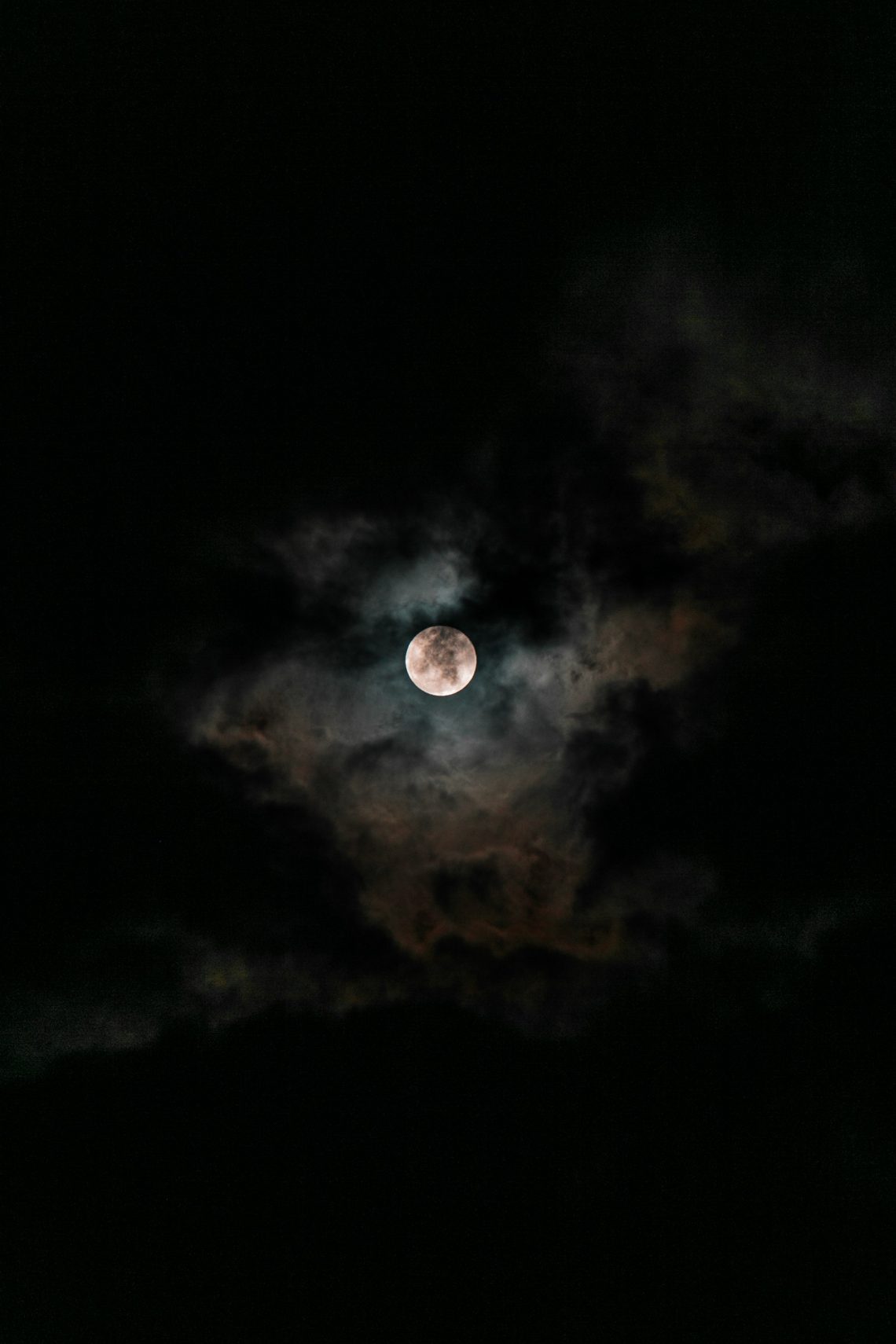
Oh, and did I mention the moon phases of flower, fruit, leaf, and root that dictate what you can do in the vineyard? You probably figured that was next.

What the Evidence Says

Casting aside the prescience for a moment, the moon has absolutely nothing to do with the growth of vines or any plant for that matter. It’s the sun and the photoperiod that make the difference.

And as for tasting different, let’s just call it a riff on the bandwagon effect. It’s not unlike someone believing the more expensive wine tastes better like I mentioned last time. Sure, it’s not a hard-and-fast rule, but cheaper ones are not necessarily bad. And wines do evolve.

The worst thing about biodynamic wines is that there are people that believe in this nonsense. The astrology angle is one thing, but the homeopathic element shoots it into the stratosphere.

The new requirements by the FTC say it all.

“(1) there is no scientific evidence that
the product works and (2) the product’s claims are based only on theories of homeopathy from
the 1700s that are not accepted by most modern medical experts.”

So, where does that leave us? Unfortunately, it is a splitter faction of the organic-nature-rules-chemicals-are-bad ideology that is fully of hype and shady marketing practices.

My take: It is utter nonsense of the most insidious type. Avoid at all costs.

Photo by Kenrick Mills on Unsplash

Organic Wines?

This entry is part 2 of 3 in the series Alternative Wine

Let me start off by saying that I’m approaching this topic from what the scientific literature says about these issues.

Defining Organic

Let’s begin with the definition of a 100-percent organic product. According to the USDA’s National Organic Program, it means that all the ingredients and processing fall under this definition with no GMOs with ones that are approved.

There are varying definitions, not unlike the wine classification system in many countries. They involve different levels of organic ingredients, certification, and use of non-organic ones.

The critical takeaway is that an official framework and regulating body exists unlike natural and biodynamic.

The definitions are nuanced and probably out of the ken of the average person. We’re talking the difference between 100, 95, and 70 percent of the contents. Then, there is that stickler about sulfites.

Sulfites and Wine

Winemakers use them to control downy mildew and other pests that could wipe out a vineyard quicker than you can say phylloxera. As with agriculture, chemicals are necessary as are GMOs to reduce the use of the former.

That’s one reason why EU winemakers are in a panic as the debate continues whether to allow its use which is currently allowed. The problem is that there isn’t an alternative. Without it, they risk devastation of their vineyards.

Sorry to break it to you, folks, but the whole world is composed of chemicals including wine, food, and even you. Suggesting otherwise shows a general ignorance about chemistry and the world around us.
That’s called the appeal to nature fallacy.

Lest we forget, sulfites are a product of fermentation. And those chemicals keep wine from turning into vinegar and preventing you from contracting nasty bacteria. E. coli, anyone?

BTW, the most toxic substance in the world is a natural one, botulism.

The bottom line is that chemicals are not bad.

What About Organic Wine?

The essential thing to understand about this topic is the cache that the term organic has with its followers. The USDA is precise about the distinctions from their regulatory perspective. Marketing is a whole different animal, and that’s where the questionable advertising practices come into play.

Some may claim that the wine tastes better. More likely, it’s another riff on the “marketing placebo effect.” In essence, it’s the phenomenon whereby someone thinks a bottle of wine tastes better just because it costs more. The opposite is possible with organic wines because of the spoilage risk.

Cutting to the Chase

If you’re drinking organic wine because you believe it’s healthier, forgive me if I chuckle. It is alcohol, after all, but I don’t fault you one bit for why you or I drink. It isn’t like drinking a glass of orange juice to ramp up your vitamin C intake even if you take it with a shot of vodka.

There are no superior health benefits, minuscule positive environmental effects, and certainly not a way to avoid the so-called evil chemicals.

Don’t get me wrong. Organic farming has lots of problems and questionable benefits, but it has brought to light better agricultural practices like integrated pest management.

It makes sense on so many levels both environmentally and economically. If we’ve learned anything from the last few years of wildfires, it’s that an income is not a sure thing for winegrowers. The fact remains that conventional agriculture has the least impact on the environment.

My take: It’s marketing hype and greenwashing with no clear consumer advantage.

Photo by Karsten Würth (@inf1783) on Unsplash

Natural Wines?

This entry is part 1 of 3 in the series Alternative Wine

The word, natural, is a loaded one. The Dictionary.com definition of “existing in or formed by nature” may seem cut and dried.

So, where does that leave us?

Defining Natural Wines

While there isn’t an official designation or legal status, there are some common denominators like no chemicals, irrigation, mechanical harvesting, and, perhaps most importantly, no manipulation after-the-fact.

Again, I’m speaking as a consumer and wine enthusiast. I am not a vintner. As I see it, there are two ways to view that last point. First, you look at it from the old world perspective.

There’s a saying by Martin Luther that sums it up well.

“Beer is made by men, wine by God.”

Tradition has dictated that Nature rules the vineyard and the harvest. That’s why irrigation and other artificial practices are forbidden in some regions and for some classifications. Some in the industry won’t even call themselves winemakers for just that reason.

Then, there is the new world, specifically, American take on it.

Wine is a commodity like any other good sold on the market. That means making a consistent product that someone will buy consistently and appeal to a large segment of the targeted audience.

It also involves creating a brand. Pick up the average bottle of domestic wine, and you’ll see an eye-catching label with a fun name. It’s all about getting that impulse buy which brings this discussion to the next point.

The Bane of Marketing

Unfortunately, all of these practices equate to another case of a huge lobby misguiding and misinforming their followers. That’s right. It’s organic farming and the natural following.

Pick up any magazine or search for a recipe on the internet. The chances are the ingredients will mention at least one organic product not because it’s better or more nutritious but to sell the message and the gospel.

BTW, under its current wording, hybrids and grafted vines which are the vast majority would qualify as GMOs.

It’s easy to see how it can become a slippery slope quickly. After all, natural doesn’t equal safe. GMOs are not harmful to people or the environment. (I’m putting my money on WHO, AMA, and AAAS instead of the likes of misinformed bloggers who say otherwise.)

Organic farming uses pesticides too, and their products contain residue no matter what you’ve heard to the contrary. That’s marketing in action too. And while it bears the brunt, they are not alone.

The FDA Fail

The problems with the term, natural, regardless of its association with wine are many. The FDA has dragged its collective heels on defining it. Instead, they have vague explanations as they have with the terms, organic and GMOs.

What the FDA hasn’t done are the following:

  • Implied a health benefit
  • Considered the processing method(s)
  • Addresssed the question of pesticides

Natural wines are less insidious but guilty nevertheless. Minimizing any negative environmental effects is worthwhile and should be the aim of anyone in agriculture.

What is wrong is when the industry blurs the lines between cherry-picking and misinformation with a good message. Producers overstep the boundaries where there is no legal definition in place. They’re making it up as they go along. That’s also what makes it filthy.

My take: Buyer, beware! There’s a lot of greenwashing that muddies the waters.

Photo by Jax on Unsplash