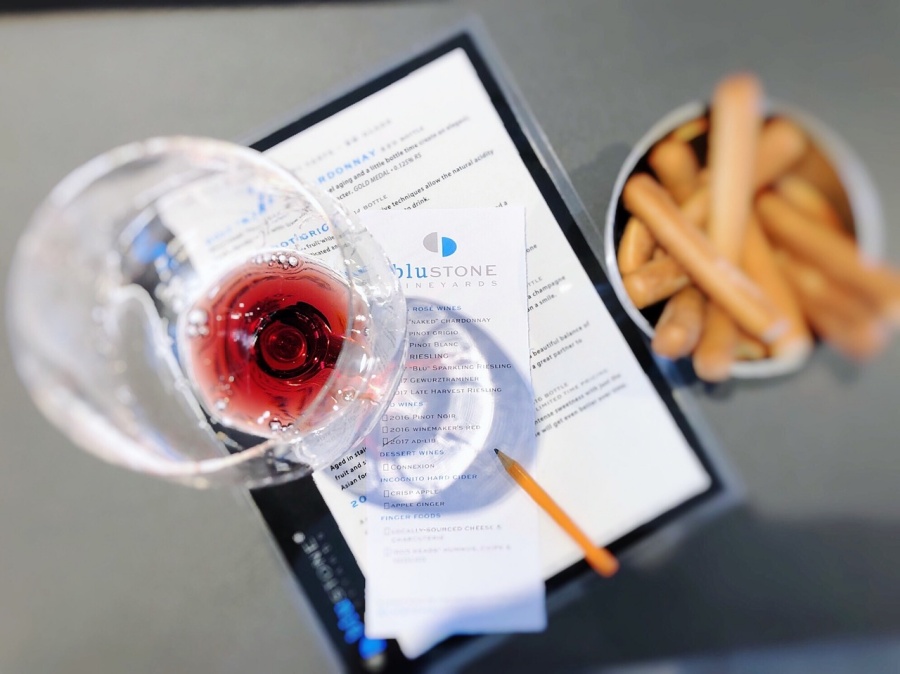
Tasting wine often seems so elusive to some people. They might read a review or just the back of the label to learn what they are supposed to smell and taste.
When they fail to get those particular aromas or tastes, they feel as if they aren’t getting it. They may feel frustrated, thinking that all they smell is grapes.
That’s too bad because they’re selling themselves short.
How People Smell
It’s helpful to begin with what our sense of smell works. That will make your experience less intimidating if you understand what’s going on in your nose and brain.
Smelling something—either good, neutral, or bad—is a two-step process. Bear in mind that it may happen so quickly that you won’t notice these things occurring.
That’s why it’s a good idea to live in the moment, and pay attention to what’s going on when you’re tasting wine.
Detecting Aromas When Tasting Wine
The first thing to occur when tasting wine involves your detection threshold. You know you smell something, but you’re not sure what it is. Several factors are at work here. They include:
- The cleanliness of the glass
- Your past
- Genetics
- The temperature of the wine
- The variety (s) of grapes
As you can see, some don’t have anything to do with the wine at all. Lingering odors from cleaning products are a major distraction from what’s in your glass.
Many things also involve you. Years ago, I managed a pet store, back in the days when some businesses sold puppies. Our shop would usually have 10–15 pups at a time. As you can imagine, it wasn’t the most pleasant tasks to clean the cages every morning—not for the person doing it or anyone else in the store, either.
Perhaps as some weird kind of defense mechanism, I learned how to turn off my sense of smell. It’s something I do to this day when there are foul smells in the air.
The point is that people vary in how scent-aware they are. You might tune out different smells, too, for different reasons. That can, in turn, affect your perceptions when tasting wine.
The Wine’s Expression
Sometimes, it rests with the wine itself. Some grape varieties, such as Chardonnay, just aren’t that aromatic. The temperature also can affect how you perceive it.
Wines that are served too cold won’t be as fragrant just out of the fridge. Wait a few minutes to give it time to warm up, and try again. The chances are you’ll have a different experience.
Identifying Aromas
The second part of the process of tasting wine is the recognition threshold. Again, your past plays a role. If you have fond memories of picking blueberries with your parents, those aromas are going to jump out of the glass at you. You may either recall the memory or the smell first or together.
That’s because the sense of smell is one of the first ones to evolve. It became crucial to survival, whether you were smelling an approaching fire, or it’s a wolf on the scent of its prey.
Your genetics are another influence. Some people can’t detect certain volatile compounds. In the same respect, your tastes to some degree are also a product of your DNA.
The other thing to bear in mind is that we may have different thresholds. If you’re more sensitivity to foul odors, you’ll probably identify some wrong with your glass of wine quickly. If you detect a musky smell, it’s not you: It’s the wine.
Improving Your Sense of Smell for Tasting Wine
Getting better at detecting aromas takes practice, like any other skill you want to master. Make it a point to smell things when you eat or drink. Think of what the aromas are, and say them out loud.
You can try the same thing with spices in the cabinet, fruit or vegetables in the crisper drawer, and at the flower section.
Early in my wine journey, I learned about the benchmark aromas of different grape varieties, including Cabernet Sauvignon. A descriptor I often saw was cassis. I never had it before, so it eluded me.
One day, I went to my favorite bottle shop and bought a bottle. Black currant liquor sounded good. Unfortunately, for me, it was not. It smelled like an overripe tomato. But as sure as I’m writing this post, I know what cassis smells like and can recognize it.
You may come across other descriptors that you may not know. Go out on a limb, and learn them! Next on my list is lychees, a popular way to describe Gewürztraminer.
Experience is an excellent teacher. I can’t think of a better way to improve your sense of smell for tasting wine. Think of it as homework.
Image by Wokandapix from Pixabay
