The Push for Indigenous Grapes

We know the so-called international grapes like Cabernet Sauvignon, Chardonnay, and Pinot Noir. The title is fitting, given the global range of these varieties. They are an excellent bridge for newcomers to wine. But what about the indigenous grapes that often have stood the test of time? Where is their place in the sun?

The Barriers to Indigenous Grapes

The names of well-known grapes are familiar and not scary to someone new to wine. They are conversation starters with bottle shop staff. They are also the varieties you’re more likely to see in mass-market offerings. Of course, it helps if the wines have a cute name or feature an animal or attractive label.

Then, there are the indigenous grapes, with names like Xinomavro, Grüner Veltliner, and Lledoner Pelut. Some people have a fear of things they can’t produce in the foods and beverages they consume. That gives some varieties an obstacle out of the gate.

The Unknown Known

The obscurity of some indigenous grapes is another strike against them. We assume if something is good that we’ll see it everywhere. Every winery must have its take on a winner with its unique touches. If no one else sells the variety, something must be wrong or off about it.

However, that goes both ways. There was a time when a popular wine grape suffered the same fate for being over the top. The “Anything But Chardonnay” movement was pushback for the buttery, unctuous California wines that pushed the envelope on flavor during the late 1990s.

The reasons that many indigenous grapes may have stayed under the radar are many. They aren’t all the same. Some are notoriously difficult to grow for a myriad of reasons. Others are more susceptible to vine diseases. Some varieties prefer it warm, whereas some don’t produce good wine if it is too hot, cold, or dry.

The Nebbiolo grape is a classic example. This red variety makes outstanding wines from appellations like Barbaresco and Barolo. It’s royalty among Italian indigenous grapes. However, this variety prefers its feet in northwestern Italy. Others have tried but haven’t succeeded on the scale Nebbiolo has achieved in its homeland.

These peculiarities have pushed some varieties to the point of extinction. Luckily, some, such as Carménère, have found new life in new homes. In this case, this red grape has succeeded admirably in Chile. However, there are other reasons why some indigenous grapes are seeing a renaissance.

The Benefits of Native Grape Varieties

One benefit that indigenous grapes offer lies in their obscurity. If you’re a winemaker and want to stand out from the crowd, what better way than to produce something no one else is doing? Of course, marketing is a big part of the trajectory.

But people love a story. Many varieties have fascinating histories within the communities in which they were developed and grew. It helps to showcase them with a particular dish or cuisine to allow a consumer to enjoy it from a gastronomic perspective.

Another emerging trend exists with young winemakers. Perhaps it was a family business. They might gravitate to the grape varieties their grandfathers grew to add substance to the stories. Or maybe an overlooked row of wines in the vineyard isn’t what they thought it was but instead was an old variety everyone thought was long gone. However, the decision to plant indigenous grapes might be a practical one.

Climate Change

Any experienced gardener will tell you native plants grow best in a particular area instead of delicate non-native ornamental varieties. Their DNA has the necessary traits to deal with the vagarities of the local climate, including challenges like drought and extreme temperatures. That’s why Nebbiolo loves its Italian homeland.

A valuable lesson exists with indigenous grapes. Remember that many factors influence vine growth, such as soil, topography, aspect, and precipitation. The French group these elements under the umbrella of terroir. Opting for these varieties can give winemakers a headstart with plants habituated to the environment and its challenges.

It’s worth noting that whatever a winemaker must do to ensure a successful harvest costs money, whether it’s irrigation or pest control. It’s a critical factor with declines in wine consumption and hits on their bottom line. You can think of it as the essence of sustainability, economically and environmentally.

Final Thoughts

Indigenous grapes have much to offer people new to wine or those well-acquainted with its virtues. They have stories of cultures and endurance. Their names may not roll off your tongue like Cabernet, but they can give you another take on wine to help you appreciate it even more. They can also provide an excellent suggestion for dinner tonight.

Discover Your Favorite Wine.
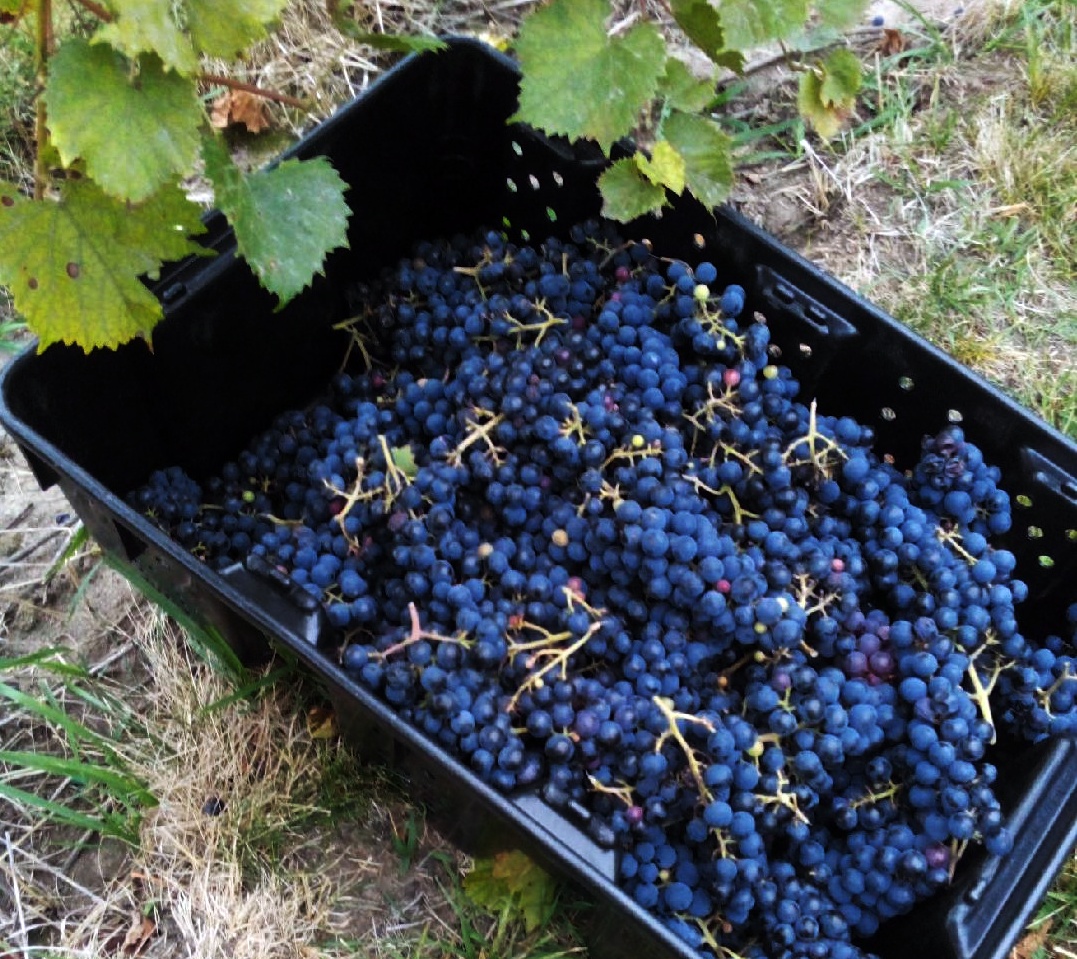
Photo by Flo P on Unsplash

Grape Harvest for 2024

It’s that time of year again. It’s the grape harvest in Minnesota! This past weekend, we helped with the grape picking at a Schram Vineyard in beautiful Waconia. We began early this year at 8 a.m. However, the experience couldn’t be better. It was ideal from a weather perspective.

We picked Marquette grapes. It is a French-American hybrid, with Pinot Noir as a part of its heritage. Minnesota has a would-be decent climate for grapes, except for that winter thing. Temperatures get well below the berries’ threshold, with the mercury sometimes dipping to -20 degrees F or lower. Grapes don’t like living in the ice bowl.

Gearing Up for the Grape Harvest

We were woefully unprepared the first time we participated in the grape harvest a few years earlier. Jeans aren’t practically after a heavy morning dew. Oh, and don’t forget gloves unless you want a visual memory of your experience. The second year, we had boots and gloves.

If you have an opportunity, I strongly urge you to participate in a grape harvest. It’s an excellent way to learn the backstory of your wine. You can see how well the berries fared during the growing season. You can taste them, which is a welcome perk to volunteering. Picking grapes gives you a sense of ownership of the wine. After all, you’re contributing to that year’s vintage.

The grape harvest isn’t strenuous work, but it’s not easy, either. You’re ready for a break when your allotted time is done. It’s a good kind of tired. However, it gives me more respect for those who do it for a living.

Doing the Grape Picking

We picked about seven bins of grapes. The harvest looked good, with a lot of low-hanging fruit and dense bunches. The weather cooperated, with the rain only coming down in a mist. It was an incredible scene walking up the hill with the fog hanging in the air. It’s a picture I’ll treasure in my mental photo album.

The three hours flew by. The vineyard was alive with the voices and laughter of the team of volunteers. It’s a meditative practice. The only other sounds were the fake bird calls to deter avian visitors. According to the workers, it does the job without the bother of the nets.

It was a good day. We enjoyed our provided lunch and glass of wine, with another one to be outside with the vines. We felt a kinship with them. They rewarded us with their fruit, and we enjoyed the grape harvest. We’ll also anxiously await the wine, with our contribution available for us in the bottle about two years from now.

The Hidden Mystery of Tasting Wine

Tasting wine often seems so elusive to some people. They might read a review or just the back of the label to learn what they are supposed to smell and taste.

When they fail to get those particular aromas or tastes, they feel as if they aren’t getting it. They may feel frustrated, thinking that all they smell is grapes.

That’s too bad because they’re selling themselves short.

How People Smell

It’s helpful to begin with what our sense of smell works. That will make your experience less intimidating if you understand what’s going on in your nose and brain.

Smelling something—either good, neutral, or bad—is a two-step process. Bear in mind that it may happen so quickly that you won’t notice these things occurring.

That’s why it’s a good idea to live in the moment, and pay attention to what’s going on when you’re tasting wine.

Detecting Aromas When Tasting Wine

The first thing to occur when tasting wine involves your detection threshold. You know you smell something, but you’re not sure what it is. Several factors are at work here. They include:

  • The cleanliness of the glass
  • Your past
  • Genetics
  • The temperature of the wine
  • The variety (s) of grapes

As you can see, some don’t have anything to do with the wine at all. Lingering odors from cleaning products are a major distraction from what’s in your glass.

Many things also involve you. Years ago, I managed a pet store, back in the days when some businesses sold puppies. Our shop would usually have 10–15 pups at a time. As you can imagine, it wasn’t the most pleasant tasks to clean the cages every morning—not for the person doing it or anyone else in the store, either.

Perhaps as some weird kind of defense mechanism, I learned how to turn off my sense of smell. It’s something I do to this day when there are foul smells in the air.

The point is that people vary in how scent-aware they are. You might tune out different smells, too, for different reasons. That can, in turn, affect your perceptions when tasting wine.

The Wine’s Expression

Sometimes, it rests with the wine itself. Some grape varieties, such as Chardonnay, just aren’t that aromatic. The temperature also can affect how you perceive it.

Wines that are served too cold won’t be as fragrant just out of the fridge. Wait a few minutes to give it time to warm up, and try again. The chances are you’ll have a different experience.

Identifying Aromas

The second part of the process of tasting wine is the recognition threshold. Again, your past plays a role. If you have fond memories of picking blueberries with your parents, those aromas are going to jump out of the glass at you. You may either recall the memory or the smell first or together.

That’s because the sense of smell is one of the first ones to evolve. It became crucial to survival, whether you were smelling an approaching fire, or it’s a wolf on the scent of its prey.

Your genetics are another influence. Some people can’t detect certain volatile compounds. In the same respect, your tastes to some degree are also a product of your DNA.

The other thing to bear in mind is that we may have different thresholds. If you’re more sensitivity to foul odors, you’ll probably identify some wrong with your glass of wine quickly. If you detect a musky smell, it’s not you: It’s the wine.

Improving Your Sense of Smell for Tasting Wine

Getting better at detecting aromas takes practice, like any other skill you want to master. Make it a point to smell things when you eat or drink. Think of what the aromas are, and say them out loud.

You can try the same thing with spices in the cabinet, fruit or vegetables in the crisper drawer, and at the flower section.

Early in my wine journey, I learned about the benchmark aromas of different grape varieties, including Cabernet Sauvignon. A descriptor I often saw was cassis. I never had it before, so it eluded me.

One day, I went to my favorite bottle shop and bought a bottle. Black currant liquor sounded good. Unfortunately, for me, it was not. It smelled like an overripe tomato. But as sure as I’m writing this post, I know what cassis smells like and can recognize it.

You may come across other descriptors that you may not know. Go out on a limb, and learn them! Next on my list is lychees, a popular way to describe Gewürztraminer.

Experience is an excellent teacher. I can’t think of a better way to improve your sense of smell for tasting wine. Think of it as homework.

Image by Wokandapix from Pixabay