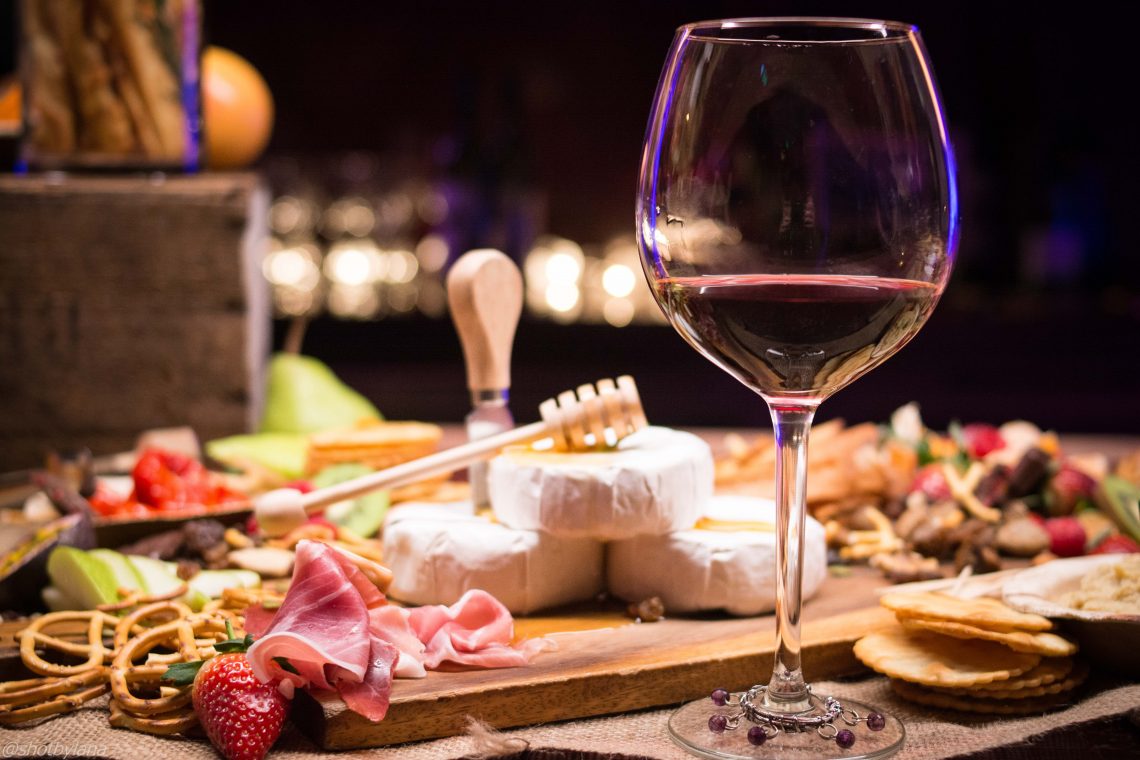
Pairing the right food and wine is a daunting task.
It’s not hard if you’re dealing with basic dishes. It’s pretty straightforward in part, because the tastes are familiar. We all know what a grilled steak or hunk of cheddar tastes like. Those things give us an edge when selecting a wine even if we’re not conscious of it at the time.
The challenge comes from that wild card. It can be a sauce, spice, or herb that throws us for a loop. It may rest with the way you prepared a meal. A braised hunk of meat tastes a world apart from one that you’ve cooked over the coals.
Then, there are those so-called established rules.
The First Rule Is That There Are No Rules
One of the most cerebral books about pairing that I’ve ever read is David Rosengarten and Joshua Wesson treatise, “Red Wine With Fish: The New Art of Matching Wine With Food.”
The authors’ logic is surprisingly simple. It makes sense! The principles mirror that of cooking. In fact, it helps if you like to do it to make the transition into pairing.
After all, there’s a reason that sweet and sour pork is a thing. Take notes! The culinary world has it down.
The book is an unabashed attack on what many consider sacred. The authors shoot down the dos and don’ts of pairing with tasty examples to prove their points.
They also propose a new approach that begins at a base level of what’s going on on your tongue to what you smell to what you feel. I’ll forgive them for perpetuating the myth that there are regions on your tongue for sweet, sour, salty, and bitter. Science, after all, is provisional and therein lies its strength.
Learning What Works
Experimentation is the thing when it comes to tackling this subject. My husband and I tried a simple approach when we went out to eat last weekend.
We shared a pizza with all the fixings like pepperoni, green peppers, onions, and of course, mushrooms. He ordered a Chianti and me, a Barbera. What we found was that by manipulating the dish we could alter the pairing.
We tried it as-is and with a little salt sprinkled on it. That brought out the sweetness in the wines and tamed them done considerably.
We did the same thing with crushed red pepper. That addition brought out some bitterness and increased the burn noticeably.
The fun thing about this experiment was how aware it made both of us about how we could fix an average pairing and make it better. I’ll be keeping it in mind when we go out to dinner tonight.
I’ll explore this fascinating area of wine knowledge further with my takes on the matter. Of course, it’s subjective. I’m counting on the fact that there are a few out there who have the same genetic mix to taste the same things, the same ways.