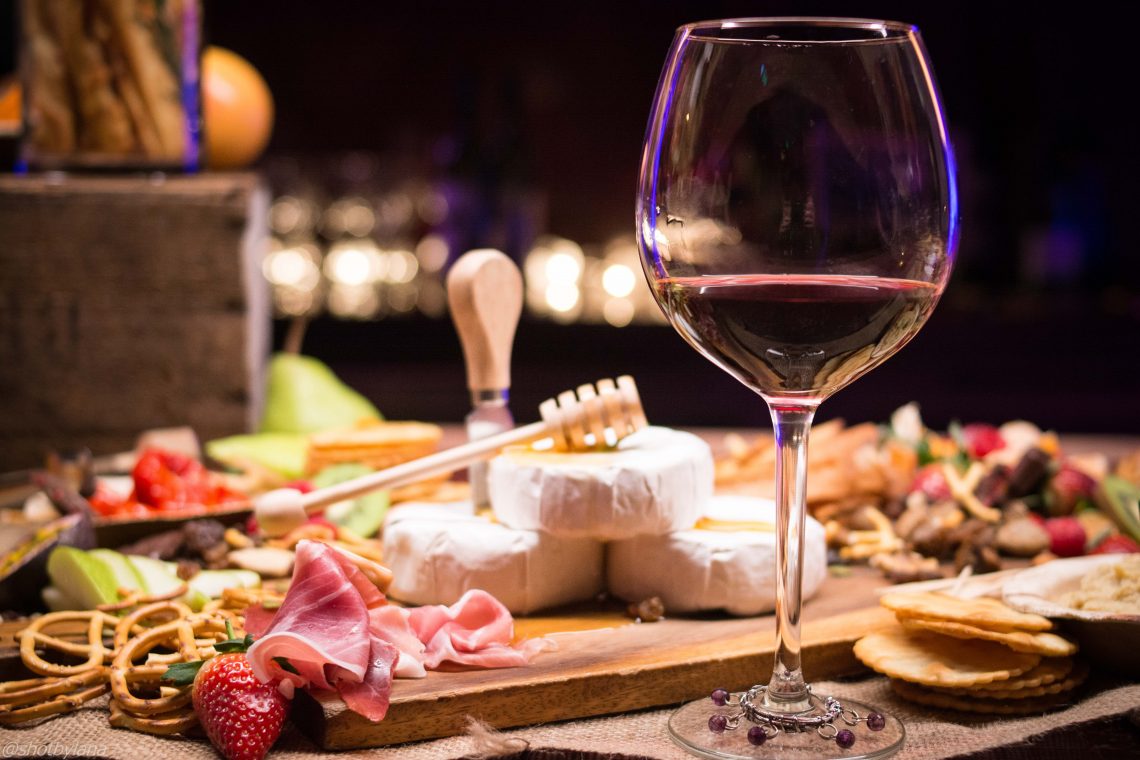
Wine Pairing Tips: Food or the Wine?

You’ve just been seated at a new restaurant that you’ve never been to before. The hostess hands you both the menu and the wine list. Which do you pick up first? I’ll explore some wine pairing tips to make your meal more enjoyable, no matter which one you decide on first.

Those Wine Rules

When push comes to shove, it depends on what you like. That makes sense from a wine pairing perspective. You gravitate toward the foods you prefer. Naturally, you’ll do the same with your wine. That’s an excellent starting point.

I hesitate to use the word, rules, because it implies that there’s no wiggle room. If we all experienced food and wine the same way, it would make sense.

But we don’t.

The first of my wine pairing tips is to view them as suggestions, albeit, good ones. It boils down to what kind of experience you want. If the wine is just wetting your whistle, it probably doesn’t make much of a difference.

On the other hand, if you want to complement each one or even make one or both better, then you need to give it a bit more thought.

What Does a Good or Bad Match Taste Like?

It would probably help if we define the goal. Let’s start with a bad match that doesn’t involve wine but makes the point loud and clear…

Have you ever taken a sip of orange juice after brushing your teeth? Yuck! Now that is a bad match. The flavors clash, making both things taste awful. That can happen with wine too.

What about a good match?

You’ve probably had had many stellar ones. Chocolate chip cookies and milk, anyone? An ice-cold beer and a brat? You can have the same experience with wine and your meal.

Some Basic Wine Pairing Tips to Start

One of the classic wine pairing tips is to match the weight of the wine with the food. Think poached salmon versus scallops in a cream sauce.

Another analogy is to compare the mouthfeel of the wine with either skim, 2 percent, or whole milk. It’s an expression of the sugar and the alcohol.

Many wine lists will give you some clues about this factor based on how the restaurant groups their selections. They may divide wines into Crisp, Light Wines, Medium-Bodied Wines, and Full-Bodied Wines.

Now you’re in the right ballpark.

The Dish on Acidity

Acidity in wine ranges from 2.9 to 3.9 on the pH scale. For comparison, vinegar is 3 whereas water is neutral at 7. It’s a good trait when it comes to what’s in your glass.

A wine that is more acidic can cut through fats in what you’re eating and create a refreshing experience. Think of champagne and lobster. Yummy!

Acidic wines can work with other dishes that also fall into this realm. A crisp rosé can make a divine pairing with Margherita pizza. The acidity of the wine cuts through the fat of the cheese and complements the tomato sauce.

More Dos and Don’ts for Wine Pairing Tips

A few more tips can help you pick a wine that you will enjoy with your meal…

Let’s say you’re drinking a lovely California Cabernet Sauvignon. The chances are that you’re noticing a drying sensation in your mouth, especially if it’s a young wine. Those are the tannins at work. A delicious way to manage them is a steak. The fat in the meat will tame them down and make for an enjoyable pairing.

One things you should always remember is how tastes interact. Salt, for example, will bring out the sweetness in wines. The interactions work both ways. Alcohol will make bitter foods more so. Likewise, it is a disaster in a glass with spicy foods.

If there is a golden rule with wine pairing tips, it is that the food should not be sweeter than the wine. Let’s just say it’s like that toothpaste-orange juice scenario.

Not good.

Wine pairing isn’t an art or science as much as it is an experience. Like flavors in food and what’s in your glass can elevate a meal. It’s a worthwhile goal.

By the way, I reach for the wine list first.

Photo by Pinar Kucuk on Unsplash

Wine Pairing: Is It Still a Thing?

The other day, the subject of wine pairing came up when hanging out with some friends.

I’m always up for a talk about anything grape-related. So, when the topic of wine pairing came up, my ears perked up, ready to dive into the conversation.

The subject of wine pairing has both fascinated and frustrated me. It never fails to amaze me when it works. The experience is sublime, a feeling shared by more than one wine professional who left corporate life to follow the vine.

When things fail, it is dismal. And then there’s that nebulous gray area where the food and wine don’t fight but aren’t bosom buddies either.

The Wine Pairing Rules

When I think of the so-called wine rules, I’m reminded of a dinner my husband and I had at a local restaurant, well known for their European cuisine.

I asked our server about what wine to get with my meal, being new to the concept of pairing. His response was “Oh, those old rules don’t apply.”

I beg to differ.

Imagine my surprise when I heard a reputed wine expert serve up the same quip. His reply was to drink what you want with whatever you’re eating. Just imbibe with the wine you like.

Okay, let’s dial back a bit on this question.

First, wine pairing isn’t a simple equation when you add in sauces, condiments, and side dishes. And it’s certainly more of a challenge when you’re having multiple courses or tapas.

Second, you have to consider the cultural factors. Old World wines developed with regional cuisines. We don’t have that to the same degree here in the United States.

Finally, we also drink wine on its own perhaps more often than not. We want our wine to taste good out of the bottle. So, where does that leave us with pairing?

The Argument to Pair Wines With Food

My husband and I took a fascinating MOOC from Coursera called “Wine Tasting: Sensory Techniques for Wine Analysis” taught by John Buechsenstein from the University of California-Davis.

In one session, he had us try a Cabernet Sauvignon alone, with a tomato, and then with a salted tomato. The experience was enlightening. If you ever needed to convince yourself or someone else about the merits of pairing, this is the way to go.

The addition of salt brought out the sweetness in the tomato and wine. It was quite noticeable.

He also presented his riff on another type of tasting that a Wine Spectator course on the subject also presents.

The idea is to get a group of foods together such as fruits, vegetables, meats, and perhaps a condiment like salsa or snack like almonds. The choice is up to you.

Then, sip your wine to get a feel for its flavor. Then, snack on one of your samples and go back to the wine. One taste is all you’ll need to learn first hand what works and what doesn’t. And it’s not rocket science.

A Few Caveats About Wine Pairing

I’d be remiss if I didn’t touch on some confounders that can gum up the works, as it were. Therein lies the differences that you may find if you compare notes with other tasters.

The fact remains that some of us are more sensitive to taste. You may have a greater density of taste buds on your tongue. The same applies to smell. Some people can detect certain scents quicker or more keenly than others. It rests with our genetic makeup.

And speaking of things we can’t control, a few of us may have genes that allow us to taste—or not taste—some things.

I demonstrated this phenomenon once during a human physiology lab I taught using green peppers. About one-third of the class found the flavor offensive while the rest enjoyed it.

People detect different tastes and smells.

Food Associations

The other thing to remember is that we all varying histories and memories associated with foods and beverages. For lack of a better comparison, how many of you would pick up and drink the same libation you had after your first hangover?

I thought not.

So, those kinds of memories exist and influence our experience. And if a wine happens to remind you of something unpleasant, you probably won’t like it either.

You can say the same thing about sweetness versus bitterness. Are you the type of person who drinks their coffee black, or do you reach for the sugar or flavored creamer?

That simple question can answer a lot of your wine quandaries.

Master of Wine, Jennifer Simonetti-Bryan has a compelling book on the subject called, “The One Minute Wine Master” that delves into the topic in some depth. An excellent read.

All of these elements affect our experience with wine and pairing it with food.

But don’t take my word for it. Find out for yourself. Learn the magic of identifying the right partners and enjoy the dance.

Photo by Jay Wennington on Unsplash

The Challenge of Wine-Food Pairing

Pairing the right food and wine is a daunting task.

It’s not hard if you’re dealing with basic dishes. It’s pretty straightforward in part, because the tastes are familiar. We all know what a grilled steak or hunk of cheddar tastes like. Those things give us an edge when selecting a wine even if we’re not conscious of it at the time.

The challenge comes from that wild card. It can be a sauce, spice, or herb that throws us for a loop. It may rest with the way you prepared a meal. A braised hunk of meat tastes a world apart from one that you’ve cooked over the coals.

Then, there are those so-called established rules.

The First Rule Is That There Are No Rules

One of the most cerebral books about pairing that I’ve ever read is David Rosengarten and Joshua Wesson treatise, “Red Wine With Fish: The New Art of Matching Wine With Food.”

The authors’ logic is surprisingly simple. It makes sense! The principles mirror that of cooking. In fact, it helps if you like to do it to make the transition into pairing.

After all, there’s a reason that sweet and sour pork is a thing. Take notes! The culinary world has it down.

The book is an unabashed attack on what many consider sacred. The authors shoot down the dos and don’ts of pairing with tasty examples to prove their points.

They also propose a new approach that begins at a base level of what’s going on on your tongue to what you smell to what you feel. I’ll forgive them for perpetuating the myth that there are regions on your tongue for sweet, sour, salty, and bitter. Science, after all, is provisional and therein lies its strength.

Learning What Works

Experimentation is the thing when it comes to tackling this subject. My husband and I tried a simple approach when we went out to eat last weekend.

We shared a pizza with all the fixings like pepperoni, green peppers, onions, and of course, mushrooms. He ordered a Chianti and me, a Barbera. What we found was that by manipulating the dish we could alter the pairing.

We tried it as-is and with a little salt sprinkled on it. That brought out the sweetness in the wines and tamed them done considerably.

We did the same thing with crushed red pepper. That addition brought out some bitterness and increased the burn noticeably.

The fun thing about this experiment was how aware it made both of us about how we could fix an average pairing and make it better. I’ll be keeping it in mind when we go out to dinner tonight.

I’ll explore this fascinating area of wine knowledge further with my takes on the matter. Of course, it’s subjective. I’m counting on the fact that there are a few out there who have the same genetic mix to taste the same things, the same ways.

Photo by Lana Abie on Unsplash